


The US-Pakistan Knowledge Corridor is not a direct job pipeline. It is a study and research bridge that can still seriously shape early careers. For Pakistani trainees and interns, it can lead to US degrees, research exposure, stronger references, and better job prospects later.
In 2026, this matters because employers care more about proven skills, communication, and portfolio work than a degree alone. If you understand how the corridor works, you can use it to build a path into internships, assistantships, and global roles.
What Is the US-Pakistan Knowledge Corridor?
The US-Pakistan Knowledge Corridor is a Pakistan-led higher-education and research initiative with US universities. Its main aim is to support advanced study, joint research, faculty links, and scholarships for Pakistani scholars.
It is often discussed through the lens of PhD support, but its career impact goes beyond that. For students and fresh graduates, it creates a stronger route into research work, graduate study, and later industry roles.
That is why people looking for how to study in the USA from Pakistan often start here. The corridor is also closely tied to the HEC US-Pakistan Knowledge Corridor programs and scholarship planning.
Why the Corridor Matters for Early-Career Professionals in 2026
In 2026, global hiring is shifting. Employers want practical proof that you can work in real teams, write clearly, and handle tools like Python, Excel, or basic data analysis. The corridor helps because US-based study and research carry strong value signals.
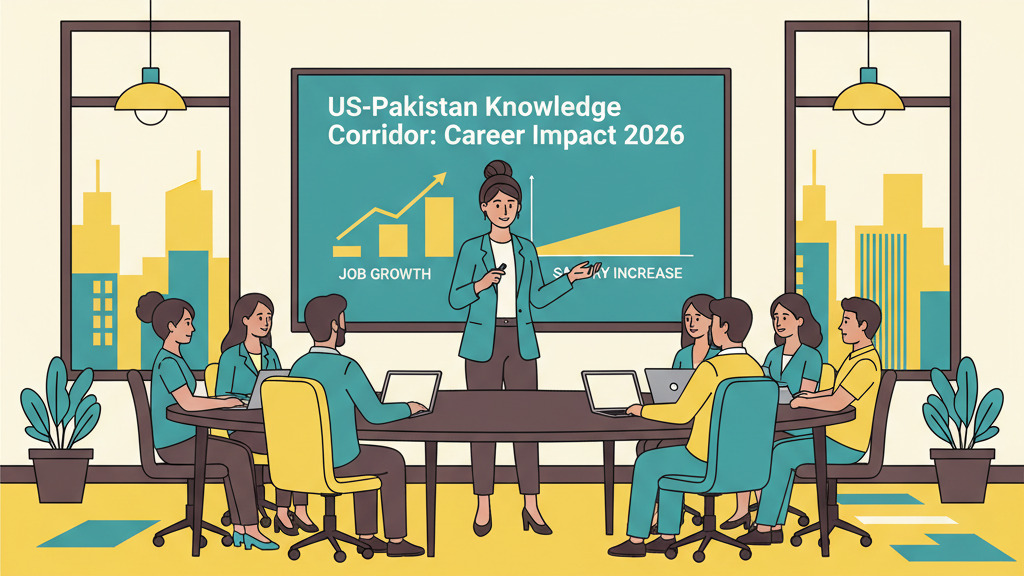
For Pakistani trainees, the biggest near-term value is not instant work rights. It is credibility. A US degree, a published paper, a strong supervisor reference, or a research assistantship can improve your chances in Pakistan, the Gulf, and remote-first teams.
This is especially useful as UAE and wider MENA employers continue to focus on AI, hybrid work, and project-based hiring. US-linked exposure can help you stand out for those roles later.
Benefits for Pakistani Students, Trainees, and Young Professionals
The corridor can help you in four practical ways:

- Better academic access: It opens paths to funded graduate study and Pakistan PhD scholarship USA options.
- Stronger skills: You build academic writing, research methods, and scientific communication.
- Better job signals: US exposure is recognized by employers in Pakistan and abroad.
- More network value: You get access to professors, labs, alumni, and industry contacts.
For example, a data science trainee who studies in a US lab can later apply for junior analyst roles in Karachi, Lahore, or Dubai. That profile is often stronger than that of a fresh graduate with no project work.
In Pakistan, entry-level tech or research assistant roles linked to international programs often fall around PKR 60,000–180,000 per month. Junior data analyst or software trainee roles can reach PKR 80,000–250,000 per month, depending on the company and city.
How US Universities and Employers Benefit
The US-Pakistan Knowledge Corridor is also useful for US universities and companies. It builds a larger pool of English-proficient, STEM-trained, globally minded Pakistani talent.

That matters because US companies can hire Pakistani talent for internships, research support, entry-level remote roles, and cross-border project work. If you are looking at US company hire Pakistani talent trends, this corridor helps create that pipeline.
Universities also gain. They get stronger research collaboration, international diversity, and candidates who are often highly motivated and academically serious.
Key Sectors and Industries to Watch in 2026
The best opportunities are in sectors that value technical skill and research output. In 2026, the strongest areas are:
- AI and data science
- Software engineering
- Cybersecurity
- Health sciences and biotechnology
- Energy and climate research
- Agriculture tech
- Fintech
- Supply chain analytics
If you want US internships for Pakistani students, these fields are the most realistic targets. They also align well with remote-first work and later roles in the Gulf.
For early-career candidates, a US graduate assistantship or research assistant role can pay around USD 18,000–35,000 per year with tuition support in many cases. Paid internships may range from USD 20 to 45 per hour, depending on location and company.
Scholarships, Exchanges, and Research Pathways
Most practical opportunities flow through scholarships, assistantships, and exchange programs. If you are exploring Pakistan scholarships in the USA 2026, start with HEC calls, university funding pages, and trusted programs like Fulbright Pakistan 2026.

Good entry points include:
- Master’s or PhD scholarships at US universities
- Research assistantships under faculty-led projects
- Exchange programs for one semester or one year
- Joint supervision or lab exchange links
When applying, keep your statement of purpose tight. Show your academic record, one clear research area, and one career direction. A vague application is easy to reject.
Use platforms like LinkedIn, university department pages, Coursera, and Google Career Certificates to build proof of interest before you apply.
Visa and Immigration Basics You Need to Understand
This is where many applicants make mistakes. The corridor is mainly an education and research pathway, not a direct work visa program.
Most experience comes through student visas, exchange visitor categories, assistantships, or post-study work routes linked to study status. If you are thinking about OPT after US study for Pakistani students, plan early and read the rules carefully.
The main risks are simple: wrong visa category, weak paperwork, missed deadlines, and assuming work rights you do not have. Always check university guidance and official immigration rules before you accept any role.
How to Turn the Corridor Into Career Growth
If you want real value from the US-Pakistan Knowledge Corridor, treat it like a long-term career plan. Do not wait for the scholarship notice alone.
- Pick one field with demand, such as AI, public health, or energy.
- Build a small portfolio with projects, papers, or lab work.
- Improve English writing and speaking for interviews and SOPs.
- Apply for scholarships, exchanges, and assistantships together.
- Stay active on LinkedIn and connect with alumni and faculty.
- Plan your return or regional job strategy early.
If you do this well, the corridor can support later roles in Pakistan, the UAE, or remote teams. Browse Trainee.in career guides for more planning help and CV writing guide tips for stronger applications.
Success Stories and What They Reveal
The most useful success stories are usually not dramatic. They are steady. A student gets a funded MS or PhD, completes a research project, gets a strong reference, and later returns for a better role in Pakistan or the Gulf.
What these stories show is simple: the corridor rewards preparation. Students who already have research samples, Python basics, or solid writing skills usually convert opportunities faster than those who apply with only grades.
This is why portfolio quality matters so much. It can turn a scholarship into a first job, and a first job into a better regional role.
Common Mistakes to Avoid
- Thinking the corridor is a direct job program.
- Applying with no detailed research or career focus.
- Ignoring English writing and presentation skills.
- Assuming every US role offers work rights.
- Skipping assistantship and exchange options.
- Waiting too long to build a portfolio.
Also, avoid sending the same SOP to every university. Match each application to the lab, program, or professor you are targeting.
Frequently Asked Questions
What is the US-Pakistan Knowledge Corridor?
It is a Pakistan-led initiative to expand higher education and research collaboration with US universities. It focuses on scholarships, faculty links, joint research, and advanced study opportunities for Pakistani scholars.
Is the Knowledge Corridor a direct work visa program?
No. It is mainly an education and research pathway. Any work experience usually comes through internships, assistantships, research roles, or post-study employment authorization tied to a student or exchange visa.
How can Pakistani trainees benefit from it in 2026?
They can use it to access US graduate study, research exposure, strong references, and globally recognized credentials. Those signals can improve chances for internships, assistantships, remote roles, and later full-time jobs.
What sectors offer the best career upside?
AI, software, cybersecurity, data science, health sciences, biotechnology, energy, agriculture tech, fintech, and supply-chain analytics offer the strongest upside in 2026.
Can US companies benefit from the corridor?
Yes. They gain access to a larger pool of English-speaking, technically trained Pakistani talent for research support, internships, entry-level roles, and distributed teams.
What should applicants prepare before applying?
A strong academic record, English test scores where required, a focused statement of purpose, research or project evidence, recommendation letters, and a clear career plan.
Conclusion
The US-Pakistan Knowledge Corridor is best seen as a long-term career bridge. It helps you build academic strength, research proof, and a network that employers trust. For early-career professionals in 2026, that can lead to better internships, stronger return options, and more global career paths.
It works best when you treat it as a structured plan, not a shortcut. If you want to compare scholarship routes, internship paths, or post-study options, keep reading Trainee.in and use our jobs board and blog for practical next steps.
