

University of Poonch Rawalakot careers matter because students now need more than a degree. They need skills, internships, and a clear path to work. For many students in Rawalakot and Azad Jammu & Kashmir, the right university can shape both local and wider job options.
This guide explains how UPR careers can connect study with real jobs in Pakistan and beyond. It covers admissions, programs, career support, alumni outcomes, skills, internships, networking, student life, and entrepreneurship. The goal is simple: help you see what comes after graduation and what you should start doing now.
Why the University of Poonch Rawalakot Matters for Career Success in 2026
UPR is not just a place to attend classes. For many students, it is the first serious step toward employment, public service, freelancing, teaching, or further study. In 2026, employers care more about job-ready skills than ever before.
This matters because the job market is changing fast. NACE’s Job Outlook 2026 points to a cautious hiring climate for new graduates. That means students need stronger CVs, better interview skills, and more practical work experience before they apply.
UPR careers are especially relevant for students who want a balance between education and employability. Rawalakot has fewer private employers than major cities, so students often need a mixed plan. That plan may include government jobs, remote work, relocation to bigger cities, or freelance work.
The wider market also sends a clear message. AI adoption in the UAE rose from 56% in 2024 to 80% in 2025, which shows how quickly employers now expect digital awareness. McKinsey’s Skill Change Index also shows demand for AI skills has grown 7x in recent years. Even if you do not study computer science, basic AI literacy now helps in many roles.
That is why the best university in Rawalakot for jobs is the one that helps you build useful skills, not just complete courses. UPR can play that role if students use its programs, faculty support, societies, and local networks well.
Admissions and Programs 2026 at UPR
If you are checking UPR admissions 2026, start with the program that fits your career plan. Admissions should not be based only on marks. They should also be based on what kind of work you want after graduation.

UPR programs and careers should be linked from the start. A student in business studies may move into banking, teaching, or office work. A student in biology may aim for healthcare, labs, or further professional study. A student in computer science may target IT support, software jobs, remote work, or freelancing.
How to think about program choice
- Pick a field with real demand. Look at teaching, banking, healthcare, IT, agriculture, public service, and NGOs.
- Check the practical side. Ask whether the department offers labs, projects, presentations, or internships.
- Think about your city options. Some jobs may be local. Others may need a move to Islamabad, Rawalpindi, Lahore, Karachi, or the Gulf.
- Match the degree with skills. A degree alone is not enough. Communication, Excel, and writing skills help in almost every field.
For students and parents, UPR admissions 2026 should be viewed as a career decision too. A program is more valuable when it gives you both subject knowledge and practical experience.
How UPR Programs Connect to Real Career Paths
One of the biggest questions students ask is simple: What can I do after this degree? That is where program-to-job mapping becomes useful. UPR careers improve when students understand the likely jobs linked to each department.
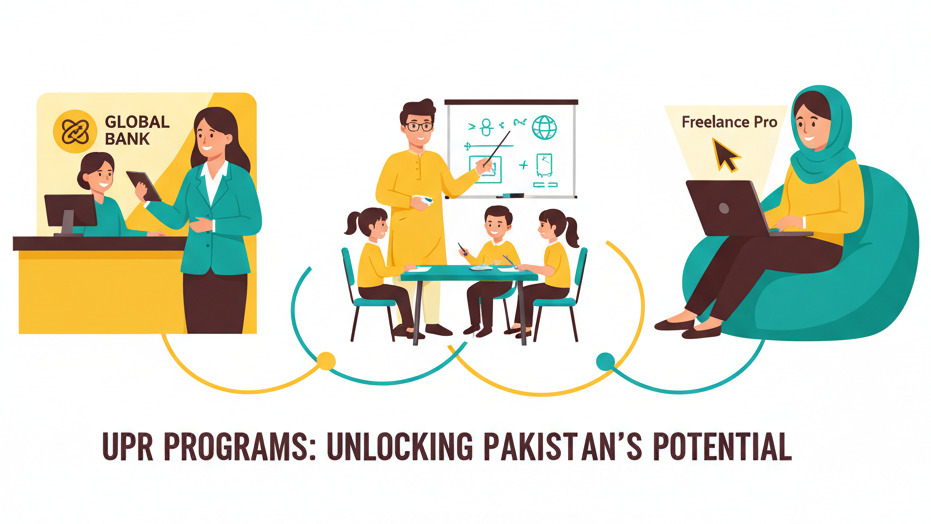
Here is a practical way to look at it:
- Business and commerce → banking, accounts, office administration, sales, customer support, finance roles.
- Computer science / IT → software support, web work, data entry, QA, freelancing, remote tech roles.
- Education → school teaching, tuition, academic support, content work, further study.
- Biology / health-related fields → labs, healthcare support, diagnostics, pharmaceutical sales, research support.
- Agriculture / related sciences → field support, agri-projects, extension work, food sector roles, research.
- Social sciences → NGOs, public sector, research, communication roles, policy support.
This is also where skills for jobs after graduation in Pakistan matter. Employers do not only ask what you studied. They also ask what tools you know, what projects you have done, and how clearly you can communicate.
A student who knows Excel, PowerPoint, basic AI tools, and presentation skills often stands out more than a student with only classroom notes. That is true in Rawalakot, and it is true in larger job markets too.
Top Career Paths for UPR Graduates
UPR graduates can move into several career tracks. Some are local. Some are national. Some can lead to Gulf jobs or remote work.

Below are some of the most realistic Pakistan careers 2026 for graduates from a UPR background.
1. Government and public sector jobs
For many students in AJK, government service is still a major goal. Roles in education, administration, health, local government, and public institutions remain strong options. These jobs often value discipline, written communication, test preparation, and subject knowledge.
2. Teaching and education
Teaching is one of the most common early-career paths in Pakistan. Private schools, colleges, tuition centers, and coaching setups often hire graduates with strong subject knowledge. If you can explain ideas simply, this path can be a strong fit.
3. Banking and finance
Banking remains a clear graduate pathway, especially for commerce, business, and economics students. Entry roles often need good communication, basic numeracy, Excel, and a neat CV. Many banks in Pakistan also value internship exposure.
4. Healthcare and allied support
Students in related fields can find work in labs, clinics, hospitals, and health support roles. This path depends heavily on qualification and practical training. The better your hands-on experience, the better your chances.
5. IT, remote work, and freelancing
This is the fastest-growing route for many young graduates. Even students outside of computer science can earn through writing, data entry, design support, social media work, and virtual assistance. Freelancing income in Pakistan can range from PKR 25,000 to PKR 200,000+ per month, depending on skill level and clients.
6. NGOs and development work
NGOs often hire graduates for field work, coordination, reporting, and communication tasks. These roles suit students who can write well, work with people, and handle basic documentation.
7. Entrepreneurship
Some students choose self-employment after graduation. That could mean a tuition center, a small digital service, an online shop, or local consultancy work. UPR entrepreneurship and innovation become important here because business skills can turn into income faster than many people expect.
Career Services and Student Support at UPR
Strong UPR career services can make a big difference, even if they are not always visible online. Students should look for any support that helps them move from study to work.

Useful support usually includes career counseling, CV help, interview preparation, internship guidance, workshops, and employer connections. If your department offers any of these, use them early. Do not wait for your final semester.
What should students ask the university?
- Does the department arrange internships?
- Are there career counseling sessions?
- Are alumni invited for talks or mentoring?
- Are there job fairs, workshops, or test-prep sessions?
- Are students guided toward local and national job platforms?
If you want to build a strong profile, combine university support with outside tools. Use a CV writing guide, practice with career guides, and browse job listings to understand what employers want.
Gallup reported in 2025 that only 20% of employees worldwide were engaged, costing the global economy $10 trillion in lost productivity. That does not mean students should panic. It means fit matters. When you know your strengths early, you can choose better work later.
Developing In-Demand Skills at UPR
In 2026, the strongest graduate profiles are not built on marks alone. They are built on a mix of subject knowledge and useful skills. UPR careers improve when students work on those skills during university, not after it.
Skills that matter most
- Communication — writing, speaking, and listening clearly.
- Digital literacy — using email, documents, spreadsheets, and online tools.
- AI literacy — understanding how to use AI tools responsibly.
- Data handling — sorting information, basic analysis, and accuracy.
- Excel — tables, formulas, and reporting.
- Presentation skills — speaking in class, team meetings, and interviews.
- Critical thinking — solving problems step by step.
- Teamwork — working well with classmates and colleagues.
- Adaptability — adjusting to change, tools, and tasks.
PwC’s 2025 Global AI Jobs Barometer found wages rising twice as quickly in AI-exposed industries compared with less exposed ones. That is a useful sign for students. AI is not only a threat. In many fields, it rewards people who know how to use it well.
For UPR students, this means small habits matter. Learn how to use Google Docs, Sheets, Canva, Zoom, and basic AI assistants. Also, learn how to write an email, prepare a presentation, and summarize information in simple language.
If you want to build these skills in a structured way, platforms like Coursera, Google Career Certificates, and LinkedIn Learning can help. For job search readiness, keep checking salary trends so you know what different roles pay.
Internships, Projects, and Practical Learning Opportunities
Classroom learning is useful, but employers also want proof that you can work. That proof comes from internships, projects, volunteering, and practical assignments. For UPR careers, this is one of the most important parts of university life.
If local internships in Rawalakot are limited, do not stop there. Look for remote internships, short project roles, NGO support work, school teaching practice, small business internships, and city-based placements in nearby markets. A student who keeps applying has more chances than one who waits for a perfect opening.
Practical ways to gain experience
- Join at least one project-based course or final-year project with real data or a real problem.
- Apply for remote internships on LinkedIn, Internshala, Rozee.pk, and company websites.
- Volunteer for event management, documentation, tutoring, or awareness campaigns.
- Create a small portfolio if you study IT, design, writing, or marketing.
- Ask teachers for references when you complete useful work.
Even one good internship can improve shortlisting. A student who has used Excel, written a report, or helped with a project feels more job-ready than a student who has only attended lectures.
Networking Opportunities in Rawalakot and Beyond
Networking sounds formal, but it often starts with simple conversations. In Rawalakot, networks may be smaller than in big cities, but they still matter a lot. Teachers, alumni, classmates, local employers, and guest speakers can all help you find work later.
For students in AJK, networking should not be limited to local areas only. It should connect Rawalakot with Islamabad, Rawalpindi, Lahore, Karachi, and the Gulf. The UAE has around 500,000 job openings every year, which makes it a realistic destination for students who are willing to prepare well.
Where to build your network
- University seminars and guest lectures
- Department events and society meetings
- Alumni chats and mentorship sessions
- LinkedIn connects with graduates and professionals
- Local offices, NGOs, and schools
- Online communities for your field
Networking is not about asking for favors. It is about staying visible, learning from others, and showing that you are serious. If you keep your LinkedIn profile clean and your CV ready, you are easier to recommend.
Alumni Success Stories from UPR
Alumni stories matter because they show what is actually possible. Many students trust a university more when they can see real outcomes from former students. That is why a strong page on the University of Poonch Rawalakot alumni should include named profiles, departments, jobs, and career paths.
For now, the most useful format is a mix of verified examples and clear story types. A business graduate who joined a bank. A computer science graduate who moved into freelance web work. A biology graduate who entered healthcare support. A social science graduate who found work in an NGO. These examples help future students picture their own path.
When publishing alumni stories, keep them concrete. Show the degree, first job, current role, city, and one skill that helped them get hired. That is more useful than vague praise.
Good alumni story format: “A UPR commerce graduate from Rawalakot completed an internship in banking, improved Excel skills, and later joined a private bank in Islamabad.”
This kind of detail builds trust. It also helps students understand that UPR careers can grow step by step, not all at once.
Entrepreneurship and Innovation at UPR
Not every student will take a salaried job right away. Some will build small businesses, online services, or freelance work. That is why UPR entrepreneurship and innovation should be treated as a real career route, not an extra topic.
Entrepreneurship works best when students learn practical business skills. That means pricing, customer handling, simple bookkeeping, digital marketing, and problem-solving. A student who can offer writing, tutoring, graphic design, or social media help can often start earning before graduation.
Simple business ideas for students
- Tuition or coaching support
- Freelance content writing
- Social media management for small businesses
- Basic web or tech support
- Event assistance and coordination
- Online reselling or e-commerce support
Innovation does not always mean a startup app or a big investor. Sometimes it means finding a local problem and offering a useful service. That is often a smarter first step for students in smaller markets like Rawalakot.
Life as a Student at UPR and Why It Matters for Jobs
Student life affects careers more than many people think. A student who joins societies, presents in class, helps with events, and talks to teachers usually grows faster than a student who stays silent. These small actions build confidence and communication skills.
In the Rawalakot job market, confidence can matter a lot. Employers often notice how you speak, how you dress, and how you explain your experience. So student life should be used as practice for real work.
What to do during university
- Speak in class when you can.
- Join at least one society or volunteer group.
- Practice CV writing every year, not only in the final semester.
- Take one online course every term if possible.
- Build a small portfolio or project file.
- Prepare for interviews early.
These habits make UPR careers stronger because they turn a student into a candidate who can work with other people. That matters in offices, schools, clinics, banks, and remote teams.
Salary and Market Insights for UPR Graduates
Salary depends on field, city, and skill level. Still, it helps to know the usual ranges. These figures can guide students who want realistic expectations after graduation.
- Pakistan: Entry-level software / IT support — PKR 45,000–120,000 per month
- Pakistan: Banking/finance entry roles — PKR 40,000–90,000 per month
- Pakistan: Teaching/education sector entry roles — PKR 30,000–80,000 per month
- Pakistan: Healthcare support / allied roles — PKR 35,000–100,000 per month
- Pakistan: Freelancing / remote services — PKR 25,000–200,000+ per month
- UAE: Entry-level graduate roles in IT, admin, customer support — AED 4,000–10,000 per month
These ranges show why skill-building matters so much. A student with better digital skills, stronger English, and a clean CV may get shortlisted faster. In remote or freelance work, the range is even wider because your earnings often depend on your portfolio.
How UPR Students Can Get Hired Before Graduation
If you want stronger UPR careers, do not wait for the final exam result. Start preparing before graduation. Many students lose time because they think the job search begins after the degree is complete.
Pre-graduation checklist
- Keep a one-page CV updated.
- Make a LinkedIn profile with a clear photo and simple headline.
- Save 3 to 5 sample answers for common interview questions.
- Complete one internship, volunteer role, or project each year.
- Learn one useful tool well, such as Excel or Canva.
- Track jobs on Rozee.pk, LinkedIn, Bayt, Naukri, and company portals.
You can also use the Trainee.in blog for more practical career reading. If you need a job-search structure, browse career guides and keep your application documents ready.
Common Mistakes to Avoid
Many students hurt their chances without realizing it. These mistakes are common, but they are avoidable.
- Choosing a degree without a job plan. Always ask what roles it can lead to.
- Waiting until the final year to build skills. Start early.
- Ignoring Excel, email, and presentation skills. These tools matter in most jobs.
- Using a weak CV. Keep it short, clean, and relevant.
- Depending only on grades. Employers want proof of ability, too.
- Ignoring local networks. Teachers, alumni, and peers can help.
- Not applying outside Rawalakot. Remote and city-based jobs widen your options.
Students also make the mistake of treating career support as an optional extra. In reality, UPR career services and self-driven efforts should work together.
Frequently Asked Questions
What career opportunities can UPR graduates pursue after graduation?
UPR graduates can move into teaching, government service, banking, healthcare, IT, agriculture, NGOs, research, and private-sector roles. The best outcomes usually come from combining the degree with internships, communication skills, and digital proficiency.
How can UPR students improve employability while studying?
Students should build practical skills through internships, project work, volunteering, presentations, online certifications, and campus societies. Adding CV writing, interview preparation, and digital tools makes graduates more competitive.
Does the Rawalakot location limit career options?
Not necessarily. While local employer density is smaller than in major cities, UPR students can target government jobs, remote work, freelancing, teaching, and relocation to larger Pakistani cities or Gulf markets after graduation.
What skills are most important for UPR students in 2026?
The most valuable skills are communication, digital literacy, data analysis, AI literacy, teamwork, adaptability, project management, and problem-solving. These skills are useful across most degree programs.
How important are alumni success stories for prospective students?
They are very important. Alumni outcomes help show real employability, reveal possible career paths, and build trust in the university’s ability to prepare students for the job market.
Can UPR support entrepreneurship?
Yes, if the university highlights business skills, innovation activities, startup guidance, and examples of students or alumni who launched ventures or freelance careers. Entrepreneurship becomes more useful when it includes practical support, not just motivation.
Conclusion
UPR careers are strongest when education, skills, and career planning work together. The university can give students a useful base, but students still need to build experience, improve communication, and stay open to local, national, and remote jobs.
For students in Rawalakot, that mix matters even more. The job market may be smaller than in big cities, but the path is still clear for those who prepare early. If you focus on practical skills and use the support around you, you can move from campus to career with more confidence.
If you want more help with job preparation, visit Trainee.in for CV writing help, job listings, and more career guides built for early-career students.
