


Many early-career developers can write working code, but that is only part of the job. Unit testing helps you prove that your code still works after changes, and that matters more in 2026 than it did a few years ago. If you are learning through Khan Academy-style practice, this skill can help you move from simple exercises to real software work with more confidence.
This unit testing guide is built for students, fresh graduates, and junior developers. It explains the basics in plain English, then shows how to turn simple logic practice into real tests in a code editor or IDE. You will also see why hiring managers care about it, how AI-assisted coding changes the game, and what you should learn first.
What Is Unit Testing? A Beginner-Friendly Definition
Unit testing means checking a small piece of code on its own. That small piece is usually a function, method, or component. The goal is simple: confirm that it gives the expected result when you give it a known input.
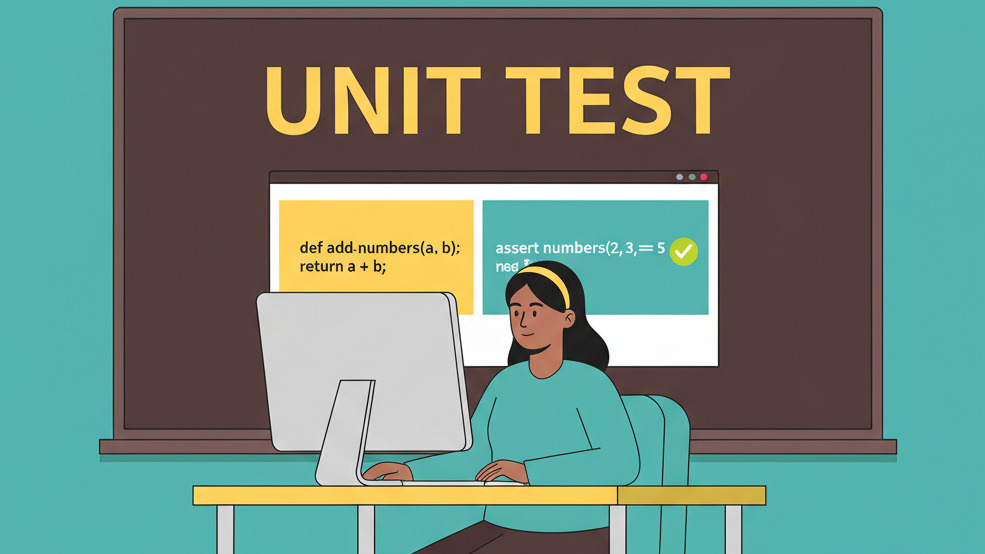
For example, if you write a function that adds two numbers, a unit test checks whether 2 + 3 gives 5. If the function starts failing later, the test tells you fast. That saves time because you do not have to hunt through the whole app to find the problem.
In simple terms, unit testing is a safety check for small parts of your code. It is one of the most useful coding best practices because it catches mistakes early and keeps your work stable as it grows.
Unit testing vs other kinds of testing
Beginners often confuse unit testing with integration testing and end-to-end testing. They are related, but they do different jobs.
- Unit tests check one small part in isolation.
- Integration tests check whether two or more parts work together.
- End-to-end tests check the full user flow, like signing in or placing an order.
For an early-career developer, unit tests are usually the best starting point. They are fast, cheap to run, and easy to repeat. In 2026, they are also one of the strongest signals that you care about quality.
Why Unit Testing Matters in 2026
Unit testing is no longer just a QA task. It is a core software development skill. Teams expect junior developers to understand how to test code, explain edge cases, and avoid regressions.

This matters even more now because nearly 90% of developers report using AI tools in some part of their workflow (2025). AI can write code quickly, but it can also produce subtle bugs. Unit tests give you a way to check that the code behaves correctly before it reaches users.
There is also a strong business reason. Organizations with strong automated testing practices report faster defect detection and lower cost of fixing bugs when compared with late-stage manual discovery (2025). That means testing is not extra work. It is part of shipping reliable code.
Another useful stat: 52% of technical leaders say increasing test automation is a top priority for improving software delivery efficiency (2025). That tells you where hiring teams are heading. If you can talk clearly about testing, you look more ready for real engineering work.
In 2026, unit tests are also the fastest and cheapest form of automated test to run in a CI pipeline (2026). That makes them the first line of defense in modern teams that release often and work across time zones.
Why employers care so much now
Hiring managers do not only want code that works once. They want code that keeps working after changes. This is especially true in startups, product companies, and remote teams where several people may touch the same codebase.
When you understand unit testing, you can answer questions like these in interviews:
- How would you test this function?
- What edge cases would you cover?
- How would you prevent a regression after a bug fix?
- What would you mock, and what would you keep real?
That is why unit testing interview questions now show up in junior frontend, backend, and full-stack interviews.
Can You Learn Unit Testing with Khan Academy?
Yes, but with one important note. Khan Academy is excellent for learning programming logic, patterns, and problem-solving. It is not a full testing platform. So the best way to use it is as a foundation.

Think of Khan Academy as a place to build confidence with loops, conditionals, arrays, functions, and simple algorithms. Those are the building blocks of unit testing. Once you understand the logic behind the code, you can move into a real editor and write tests around the same ideas.
This is where many beginner resources fall short. They explain testing theory, but they do not show the bridge from Khan Academy programming practice to real unit tests. That bridge matters. Without it, testing feels abstract.
How to turn Khan Academy practice into real test skills
If you are learning from Khan Academy-style exercises, use this approach:
- Take one small exercise, such as a function that checks if a number is even.
- Write the same function in a code editor like VS Code.
- List the inputs and outputs before writing any tests.
- Write unit tests for normal cases, edge cases, and error cases.
- Run the tests and change the function slightly to see what fails.
That process teaches more than theory. It shows you how code behaves under change, which is the real purpose of unit testing. If you want a practical unit test Khan Academy answers style approach, this is the one that works.
Best Path for Early-Career Developers to Learn Unit Testing
If you are starting from zero, do not try to learn everything at once. Start small. A good unit testing guide should build your skills in steps.
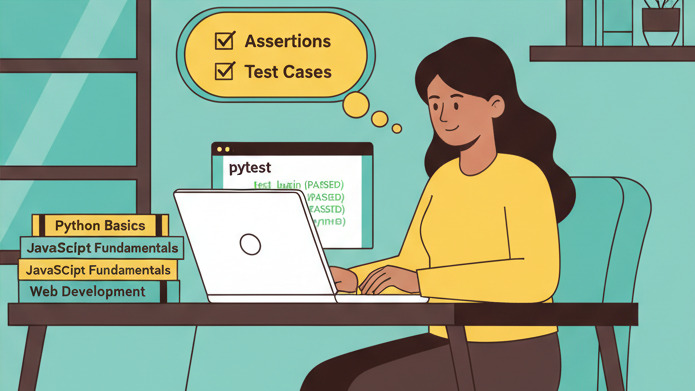
Step 1: Learn basic programming logic
Before you write tests, be comfortable with functions, conditionals, arrays, and objects. Python basics or JavaScript fundamentals are enough to begin. If you can solve simple logic problems, you can learn testing.
Step 2: Learn assertions
An assertion is a check. It says, “This value should equal that value.” Most tests are built on assertions. If you understand assertions, you understand the core of how tests work.
Step 3: Learn test cases and test structure
A test case is one thing you want to verify. A good test structure keeps each test focused on one behavior. This makes your tests easy to read and easy to fix later.
Step 4: Write small tests in a real framework
For JavaScript, many beginners start with Jest or Vitest. For Python, pytest is a common choice. For Java, JUnit is widely used. The best unit testing framework for beginners is usually the one that fits the language you are already learning.
Step 5: Move to mocking, fixtures, and TDD
Once you are comfortable with simple cases, learn how to isolate code with mocks and stubs. Then learn fixtures for reusable test data. After that, try test-driven development, or TDD, where you write the test before the code.
This order helps because it follows how real skills are built. It also keeps the learning curve manageable for an early-career developer.
Unit Testing Basics: Assertions, Test Cases, and Test Structure
Before you move to advanced topics, you need a solid base. Most testing mistakes happen because beginners rush past the basics.
Assertions
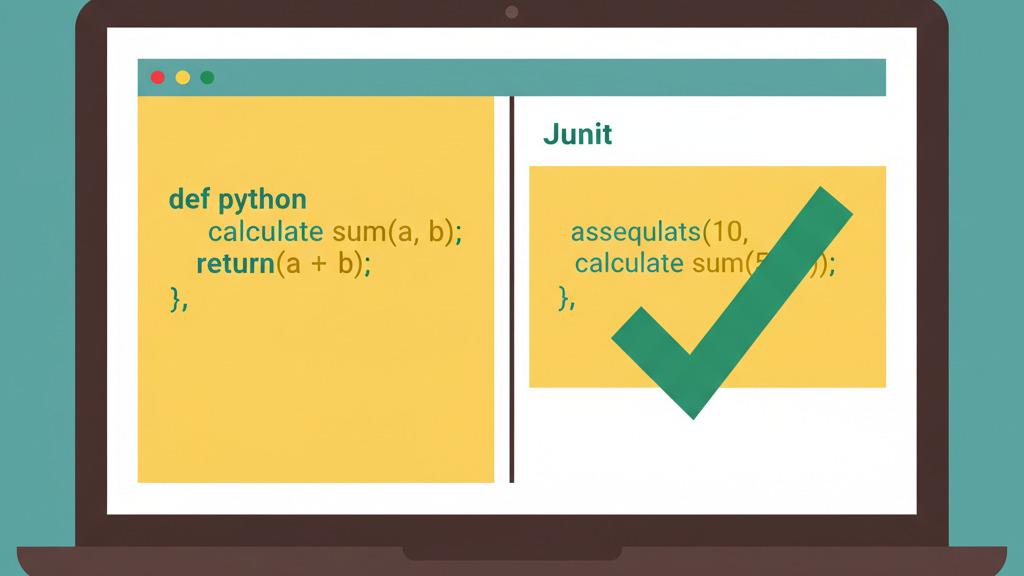
An assertion compares the actual result with the expected result. If they match, the test passes. If they do not, the test fails. That failure is useful because it tells you something changed.
Example: if a function should return 10 but returns 12, the test should fail. This is how unit tests protect you from silent bugs.
Test cases
A good test case checks one behavior only. If you mix too many checks into one test, it becomes harder to understand. It also becomes harder to know what failed.
Think of test cases as small promises. Each one should tell you one clear thing about the code.
Test structure
Many teams use the Arrange-Act-Assert pattern:
- Arrange: set up the inputs and data.
- Act: call the function or method.
- Assert: check the result.
This structure is simple, readable, and common across languages. It is also easy to explain in interviews, which helps with career readiness in 2026.
Advanced Unit Testing Concepts: Mocks, Stubs, Fixtures, and TDD
Once you know the basics, you can move into more advanced unit testing concepts. These help you test code that depends on other code, APIs, databases, or files.
Mocks
A mock replaces a real dependency with a fake one. For example, if your function sends an email, you may not want to send a real email in a test. A mock helps you check whether the function tried to send it.
Stubs
A stub gives a fixed response. If your code calls an API, a stub can return sample data without making a network request. This keeps the test fast and stable.
Fixtures
Fixtures are reusable pieces of test data. They help when several tests need the same setup. Good fixtures make tests cleaner, but too much shared setup can make them harder to follow.
Test-driven development
TDD means you write the test first, then write the code to pass it. Many juniors think TDD is only for experts. That is not true. You can practice it on small functions and learn a lot from the habit.
TDD is useful because it forces you to think about expected behavior before implementation. That often leads to cleaner code and fewer surprises.
Real-World Unit Testing Examples for Frontend and Backend Code
The best way to understand unit testing is to see it in real work. Here are simple examples that map to common junior developer tasks.
Frontend example
Imagine a button component that should show “Save” when enabled and “Saving...” when loading. A frontend unit test checks whether the component displays the right text based on the state.
This matters in React, Vue, or similar frameworks because component behavior can change quickly. A small test helps you catch a UI bug before it reaches users.
Backend example
Imagine a function that calculates shipping fees based on order value. You would test normal orders, free-shipping thresholds, and edge cases like negative values or empty inputs.
That kind of test is useful because it documents the business rule. It also protects the code when someone changes the pricing logic later.
API helper example
Suppose you have a helper function that formats API response data. You can test whether it handles missing fields, unexpected types, and successful responses. That is a common case in Python, JavaScript, and Java projects.
These examples show why employers value developers who can write readable, maintainable tests. Good tests are not only checks. They also explain intent.
How to Integrate Unit Testing into Your Daily Workflow
Testing works best when it is part of your normal process, not something you do at the end. If you wait until the end, you will likely skip it when deadlines get tight.
Start with Git and version control.
Use Git so you can track changes and link tests to code updates. When you commit code, include tests in the same pull request if possible. That makes the review easier.
Run tests before every push.
Even a small project benefits from a quick test run before you push changes. It takes little time and catches basic mistakes early.
Add tests while debugging.g
If you find a bug, write a test for it before or while you fix it. Then run the test again after the fix. This prevents the same bug from returning later.
Use CI/CD basics
In a real team, tests are often run inside a CI pipeline. That means your code gets checked automatically after each change. This is one reason unit tests are so valuable in modern software development.
In distributed teams, tests act like a shared contract. They help developers in different time zones trust the same code behavior without waiting for manual checks.
Common Unit Testing Challenges and How to Solve Them
Beginners usually face the same few problems. The good news is that most of them are easy to fix once you know what to look for.
Testing implementation details instead of behavior
Do not test how the code works internally unless it matters. Test what the user or calling code should see. Behavior-focused tests are more stable and less brittle.
Overusing mocks
Mocks are useful, but too many mocks can make tests fake and hard to trust. If you mock everything, you may stop testing real logic. Use mocks only where isolation is needed.
Poor test names
A test name should tell you what behavior is being checked. A vague name like “test1” is useless. A better name, like “returns zero for empty input,t,” helps you understand the test quickly.
Ignoring edge cases
Beginners often test only the happy path. That is not enough. You should also think about empty values, invalid input, large numbers, missing data, and boundary conditions.
Writing brittle tests
Brittle tests break too easily when harmless code changes happen. This often comes from checking too many details at once. Keep tests small and focused.
Not knowing what not to test
This is a common gap in beginner content. You do not need a separate test for every line. Test behavior that matters. Avoid testing library code, framework internals, or tiny implementation steps that can often change.
Unit Testing Trends, Tools, and the Future of Developer Quality
The future of unit testing is being shaped by AI, automation, and faster release cycles. That makes the skill even more important, not less.
AI-assisted coding is now normal in many teams. Since nearly 90% of developers report using AI tools in some part of their workflow (2025), code review alone is not enough. Tests are the practical way to verify what AI or humans write.
Testing libraries are also becoming easier to use. Many modern frameworks come with simpler defaults, better watch modes, and tighter CI support. That encourages test-first habits and continuous validation.
For early-career developers, this means your value is not just in writing code fast. It is in writing code that can be checked, maintained, and changed safely. That is why unit testing remains one of the strongest software development skills in 2026.
What to learn next
If you already know the basics, move on to these related topics:
- testing fundamentals for beginners
- Career guides for junior developers
- entry-level developer jobs
- developer salary trends
- CV writing for software roles
You can also look at API testing basics, frontend component testing, debugging, and code review etiquette. These skills work well together.
Salary and Market Insights for Unit Testing Skills
Testing knowledge does not replace coding skills, but it can improve your job chances and salary range. In many markets, candidates who can explain how to write unit tests stand out in junior hiring.
- Pakistan: Junior Software Developer / QA-leaning Developer — PKR 80,000–180,000 per month. Freshers with testing knowledge often have an edge in startups and product companies.
- India: Junior Software Engineer / SDE-1 — INR 4 LPA–10 LPA. Candidates who can explain unit testing and show project examples usually perform better in entry-level interviews.
- UAE: Junior Software Developer — AED 8,000–18,000 per month. Testing and automation knowledge is attractive in product, fintech, and digital transformation roles.
- Remote global roles: Entry-level developer positions — USD 35,000–70,000 per year. Distributed teams often expect strong testing habits because quality is enforced through automation.
In Pakistan, this can matter for jobs in Karachi, Lahore, and Islamabad, where startups often expect developers to own quality. In India, many freshers apply through Internshala, Naukri, LinkedIn, and company career pages. In the UAE, Bayt and GulfTalent are common places to look for junior openings, especially in Dubai and Abu Dhabi.
How to Talk About Unit Testing in Interviews
Many juniors know the definition but struggle to explain it in a real interview. You do not need perfect jargon. You need a clear, practical answer.
Here is a simple way to answer:
“I use unit tests to check small pieces of code in isolation. I start with normal cases, then add edge cases. This helps me catch regressions early and keeps my code easier to maintain.”
If the interviewer asks for an example, use one from your own project. For example, explain how you tested a login validator, a price calculator, or a form helper function.
That style of answer shows more than memorized theory. It shows thinking, structure, and care. Those are traits employers notice.
Common Mistakes to Avoid
Some mistakes repeat again and again among beginners. Avoiding them will save you time and make your tests much better.
- Writing tests only after the code is finished.
- Testing private implementation details instead of behavior.
- Using too many mocks for simple logic.
- Leaving out edge cases and invalid inputs.
- Giving tests weak names that do not explain the behavior.
- Copying examples without understanding why the test exists.
- Ignoring CI/CD basics and never running tests automatically.
If you fix just these points, your unit testing skills will improve quickly. That also helps with debugging and code review because your code becomes easier to trust.
Frequently Asked Questions
What is unit testing in simple terms?
Unit testing is the practice of checking small pieces of code, such as functions or methods, in isolation to confirm they behave as expected. It helps you catch bugs early and keep changes safe.
Why should early-career developers learn unit testing in 2026?
Because it improves code quality, speeds up debugging, strengthens interview performance, and is increasingly important in AI-assisted development workflows. It is one of the most useful career readiness 2026 skills for junior developers.
Can Khan Academy help me learn unit testing?
Khan Academy is useful for building programming fundamentals and logical thinking, but unit testing usually needs to be learned through code examples, test frameworks, and small projects in a real development environment. It works best as a foundation, not the full lesson.
What should beginners learn first?
Start with assertions, test cases, an arrange-act-assert structure, and simple functions before moving to mocks, fixtures, and CI-based test execution. This order keeps the learning clear and practical.
What are common unit testing mistakes?
Testing implementation details instead of behavior, writing brittle tests, overusing mocks, poor test naming, and not covering edge cases are common mistakes. These issues make tests harder to trust and maintain.
How do unit tests help in interviews?
They show that you understand code quality, edge cases, maintainability, and how to think like an engineer who ships reliable software. That is why unit testing interview questions matter even for junior roles.
Conclusion
Unit testing is a practical skill, not a theoretical topic. If you learn it well, you will write safer code, debug faster, and explain your work more clearly in interviews. That is useful whether you are applying in Pakistan, India, the UAE, or for remote roles.
Start with small functions, simple assertions, and clear test cases. Then add mocks, fixtures, and CI as your confidence grows. If you already use Khan Academy for logic practice, use that same habit to build real testing skills in a code editor.
For more practical help, explore Trainee.in’s blog, check career guides for early developers, and review entry-level jobs that value testing knowledge.
