


SALU entry test papers are the best place to start if you want to prepare for the 2026 admission test with less guesswork. They show the style of questions, the likely difficulty level, and the kind of time pressure you may face. For art and design applicants, this matters even more because the test can also reward visual awareness and creative thinking.
This article explains how to use SALU entry test papers in a practical way, how to build a short study plan, and what mistakes to avoid. It also covers the parts of SALU preparation 2026 that students often miss, like time control, basic sketching practice, and checking the latest official notice.
SALU Entry Test 2026: What to Expect
The Shaheed Allah Bakhsh Soomro University admission test may change from year to year, so always confirm the latest SALU entry test syllabus and admission notice from the official university source. Do not rely only on old posts or random PDF files shared online. If the department updates the format, your prep should change too.

For most art school admissions, the test usually mixes general aptitude, English, visual understanding, and creative basics. Some programs may also look at drawing or portfolio-related ability later in the process. That is why a written-only study plan is usually not enough.
Core areas to prepare
- General aptitude: simple logic, patterns, and basic problem-solving.
- English: grammar, comprehension, sentence sense, and vocabulary.
- Visual awareness: shapes, proportion, observation, and design sense.
- Creative basics: sketching, idea building, and neat presentation.
A useful way to think about SALU preparation 2026 is this: the test checks whether you can think clearly, read carefully, and respond under time pressure. That is common in many university entry tests Pakistan students face, not just SALU.
SALU Past Papers: How to Use Them Smartly
Past papers are not just for memorizing answers. Their real value is pattern study. When you solve several SALU entry test papers, you begin to see repeated question types, common wording, and which topics appear again and again.
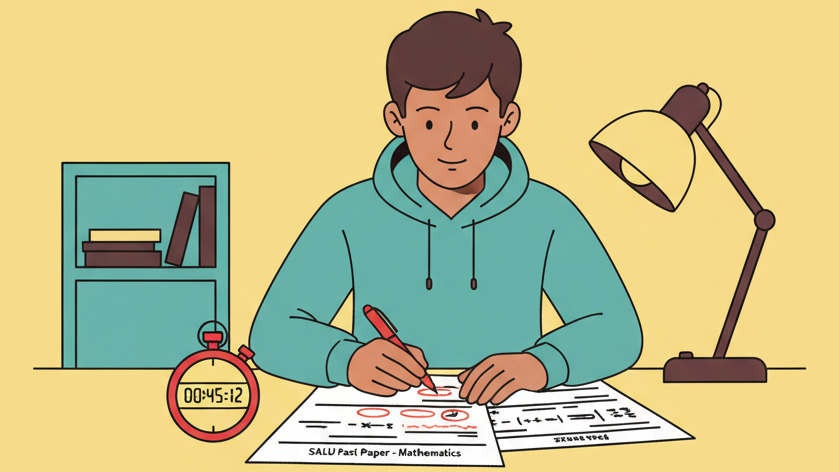
Start with one paper without a timer. Then review the full paper and mark every question you got wrong, guessed, or skipped. After that, solve the same paper again under timed conditions. This simple method gives better results than reading notes for hours.
A better way to study past papers
- First, collect whatever SALU past papers PDF files you can find from trusted student sources or department groups.
- Check whether the paper matches your program and year.
- Solve one paper in exam conditions.
- Note weak topics by category, such as English, aptitude, or sketching.
- Revise those weak areas the same day or the next day.
- Repeat with the next paper until your speed improves.
If you want to go deeper, use this with the Trainee.in blog and related career guides for broader preparation habits. You can also track study progress with a simple notebook or spreadsheet.
Most Repeated SALU Question Types
There is no confirmed official question bank in the search results, so avoid assuming the exact 2026 pattern. Still, SALU entry test papers and similar university entry tests often repeat a few themes. If you prepare these areas well, you cover a large part of the risk.

- English comprehension: short passages, grammar, synonyms, and sentence correction.
- Aptitude questions: number sequences, logic, basic arithmetic, and comparison.
- Visual questions: shape matching, object recognition, and design sense.
- Creative prompts: simple drawing ideas, observation tasks, or concept-based tasks.
For art and design students, this last part is important. Even if the entry test is written, the institute may still value a portfolio-ready mindset. In later stages, strong sketching and clean visual thinking can help you stand out.
A 6-Week SALU Study Plan for 2026
A short plan works best if you stay consistent. Many students try to study everything at once and end up doing nothing well. A layered plan is safer and more realistic.
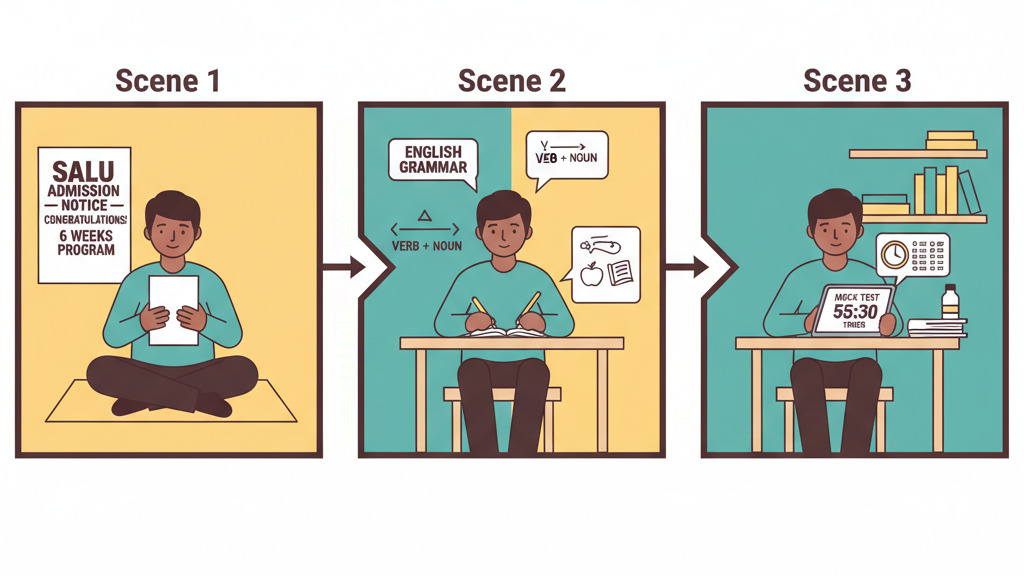
Week 1 and 2: understand the pattern
Read the admission notice. Confirm the SALU entry test syllabus, eligibility rules, and any department-specific requirements. Solve one or two papers only to understand the format, not to score high yet.
Week 3 and 4: target weak areas
Now focus on the topics that keep causing mistakes. If English is weak, practice comprehension and grammar daily. If aptitude is weak, do short timed drills. If drawing is relevant, sketch simple objects for 15 to 20 minutes a day.
Week 5 and 6: full mock practice
Do at least 2 to 3 full mock tests before exam day. Keep the timer on. Sit in a quiet place. No phone. No pauses. After each mock, review every wrong answer and write the reason next to it.
This method works because it mixes speed, revision, and self-checking. That is far better than reading notes and hoping the paper feels familiar.
Common SALU Entry Test Mistakes to Avoid
Many students lose marks for avoidable reasons, not because the paper is impossible. The same mistakes show up in many university entry tests Pakistan students take every year.
- Ignoring the official notice: old information can mislead you.
- Studying only guidebooks: guidebooks are not a replacement for past papers.
- Skipping timed practice: speed matters in real tests.
- Leaving questions blank too early: Attempt every possible question.
- Not reviewing mistakes: repeated errors waste marks.
- Ignoring creative basics: art and design admissions often value more than theory.
Another common problem is panic. Students know the answer after the test, but not during the test. That usually means they need more mock practice and better time control, not more random reading.
Art and Design Test Preparation Beyond the Syllabus
SALU preparation 2026 should not stop at books. For art school admissions, practical skill still matters. Even if the written test is the first filter, your later performance may depend on sketching, observation, and a tidy portfolio.

Spend some time on simple habits that build creative confidence:
- Draw everyday objects from different angles.
- Practice clean lines, shading, and proportion.
- Look at posters, logos, and layouts to study balance.
- Collect 5 to 10 of your best works in one folder.
If you are also thinking about future work, this is useful beyond admission. In Pakistan, an entry-level graphic designer often earns PKR 30,000–70,000 per month, while a junior UI/UX or digital design intern may earn PKR 20,000–50,000. In India, entry-level designer pay is often INR 18,000–45,000 per month. In the UAE, a junior graphic designer may earn AED 4,000–8,000, and a creative intern or design trainee may earn AED 2,500–5,000. These ranges show why practical skill matters early.
How to Manage Time in the SALU Entry Test
Time pressure is one of the biggest reasons students lose marks. The best fix is to train under test conditions before the real day. Do not just solve questions; solve them within a set limit.
Use this simple rule in practice:
- Start with the easiest section first.
- Do not stay stuck on one hard question.
- Mark uncertain answers and return later.
- Keep the last 5 minutes for review.
This also helps with exam stress management. When you already know your pacing, the paper feels less threatening. That matters in both creative and academic selection tests.
Frequently Asked Questions
What is the best way to prepare for the SALU entry test in 2026?
Start by confirming the official test format, then solve as many past papers as possible under timed conditions. After that, review weak areas, practice likely topics, and do at least 2 to 3 full mock tests before exam day.
Why are SALU past papers so important?
SALU entry test papers show the actual style of questions, repeated themes, difficulty level, and time pressure. They help you focus on what matters instead of guessing the syllabus.
What subjects should I focus on for an art and design entry test?
Focus on visual awareness, basic drawing or sketching skills, general aptitude, English comprehension, and any creative fundamentals listed in the admission notice. If the department asks for a portfolio, prepare that too.
How many months do I need to prepare for SALU?
A focused 6 to 8-week plan can help with basic readiness. But 3 to 6 months is better if you want stronger concept control, sketching practice, and enough mock-test repetition.
Should I also prepare a portfolio?
Yes, if the department or program asks for one, or if selection includes a creative review. Even when it is not officially required, a small portfolio helps show artistic seriousness.
Where can I find more help for admission prep?
You can use the salary trends page to understand creative career value after admission, and the CV writing guide when you later build internship or job applications. For broader job and skill support, see find jobs.
Conclusion
SALU entry test papers give you the clearest picture of what to expect in 2026. If you study the pattern, practice under time, and review mistakes properly, your prep becomes much more effective. For art and design applicants, adding sketching and portfolio habits can give you an extra edge. The main thing is to stay close to the official notice and keep your practice focused.
If you want more practical help with admission prep, skill building, and early-career planning, explore the latest resources on Trainee.in.
