

NTDC training is one of the clearest entry paths into Pakistan’s power transmission sector. For engineering and technical graduates, it can lead to real field exposure, utility systems knowledge, and long-term career value.
In 2026, many applicants will search for eligibility, the application process, document lists, and what happens after selection. This guide covers all of that in plain language, so you can check openings quickly and apply with less confusion.
What is NTDC, and Why Its Training Programs Matter
NTDC stands for the National Transmission and Despatch Company. It manages power transmission and dispatch across Pakistan, which makes it a key part of the country’s energy system.
That matters for early-career candidates because NTDC training is not general office training. It is tied to substation work, transmission lines, protection systems, dispatch operations, planning, and utility maintenance. If you want a career in power systems or utility operations, this is a strong starting point.
For many students, NTDC careers are attractive because the work connects to the national infrastructure directly. You are not only learning theory. You are seeing how power moves through the grid, how faults are handled, and how reliability is maintained.
That practical exposure is valuable in Pakistan’s energy sector jobs market. The same skill set can later help in WAPDA-linked work, private power companies, EPC firms, and power consultancy roles.
NTDC Training Programs in 2026: Overview
The most important thing to know is that NTDC training programs are notice-driven. In other words, the exact openings, dates, disciplines, stipend, and selection method depend on the official announcement for that year.
For 2026, the safest approach is to treat every notice as the source of truth. Do not rely on old social media posts or copied job ads. Check official NTDC pages first, then compare the notice with trusted job boards.
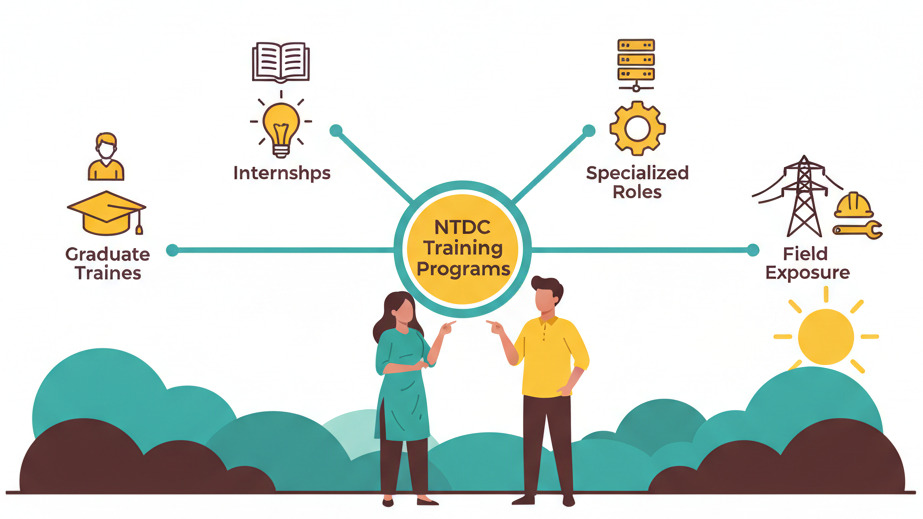
Most readers looking for NTDC training 2026 want one of these pathways:
- Graduate trainee programs for fresh engineering or technical graduates.
- NTDC internship program options for students or recent graduates.
- Specialized trainee roles in electrical, mechanical, civil, IT, finance, HR, or related functions.
- Field-based technical exposure in transmission, substations, and operations.
Some notices may focus on engineering trainee jobs that Pakistan applicants know well. Others may include support functions if the company needs broader administrative or digital skills.
If you are comparing NTDC with other Pakistani energy-sector trainee programs, focus on three things: the discipline match, the field exposure, and the path after training. Those three points matter more than the title alone.
How NTDC training fits the 2026 job market
Power-sector hiring is moving toward grid modernization, reliability, and digital dispatch systems. That means young candidates who understand technical systems, data handling, and safety rules have an edge.
Across the region, infrastructure projects also keep creating technical jobs. For example, the UAE is seeing over 500,000 annual job openings driven by new projects and international investment (2025-26). The UAE technology sector also saw a notable 20% rise in vacancies (2023-2026). These trends do not describe NTDC directly, but they show how infrastructure and systems-based work keep rewarding technical talent.
In Pakistan, the same logic applies to transmission expansion, substations, and dispatch reliability. NTDC training helps candidates enter that environment with a practical base.
NTDC Eligibility Criteria for Training
NTDC eligibility criteria can change from one notice to another, so you should always read the official ad carefully. Still, most training notices in Pakistan’s public-sector energy space look for fresh or early-career candidates from relevant disciplines.
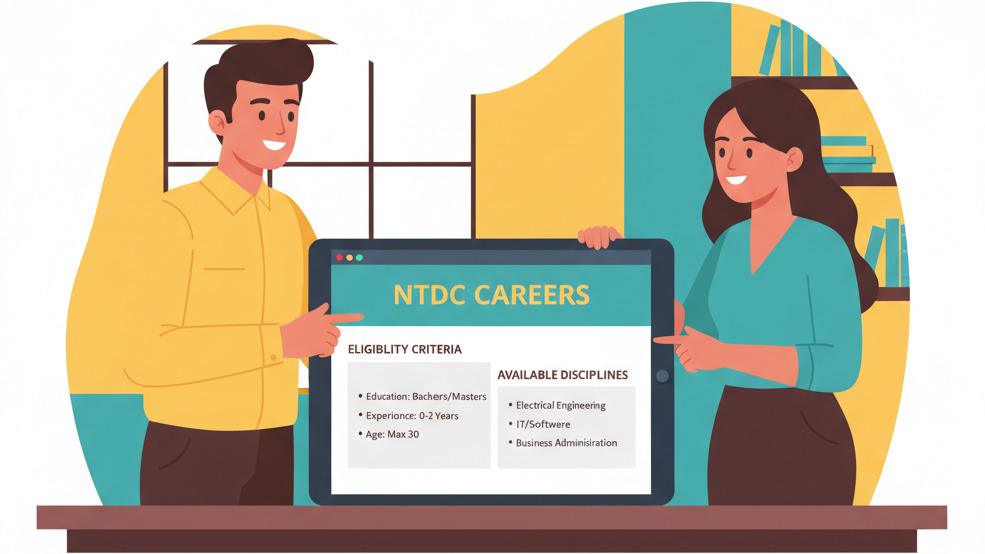
Here is the usual pattern you should expect:
- Education: Bachelor’s degree or diploma in a relevant field, depending on the program.
- Disciplines: Electrical engineering, mechanical engineering, civil engineering, IT, finance, HR, or other related technical fields.
- Experience: Many trainee programs prefer fresh graduates or those with very limited experience.
- Age limit: May apply in some notices. Check the exact wording.
- Academic record: A minimum CGPA or marks requirement may be mentioned.
For technical roles, electrical engineering is often the most direct fit. But NTDC internship programs and trainee notices can sometimes include other disciplines, especially where project support, systems support, or operational support is needed.
If you are a diploma holder, do not assume you are excluded. Some technical notices in Pakistan’s power sector do accept diploma-level candidates for specific roles. But the exact rule depends on the ad, so read it line by line.
What to check before applying
- Does your degree match the discipline in the notice?
- Are you within the age or experience limit, if any?
- Do you have all documents ready in the required format?
- Is the application online, by courier, or both?
- Is the deadline clearly mentioned?
A quick eligibility check saves time. It also prevents rejected applications caused by small mistakes.
How to Apply for NTDC Training
People often search for how to apply for NTDC training, but the process can vary. Some notices use an online portal. Others ask for a prescribed form, attached documents, and submission by courier.
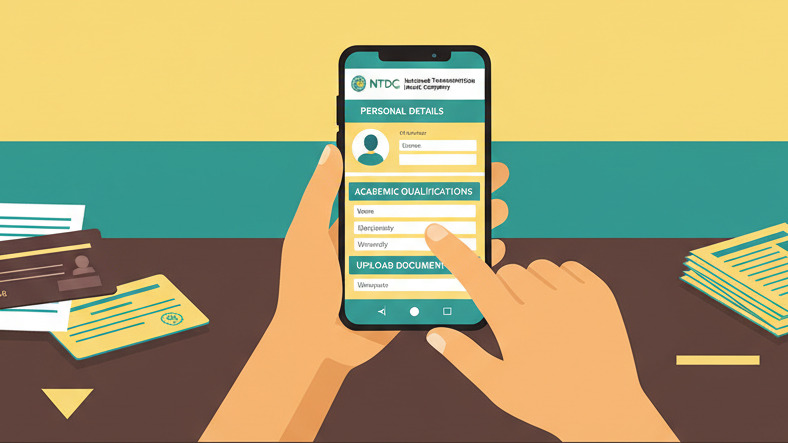
Use this simple process each time you see an NTDC opening:
- Read the official notice first. Do not start with job portals or reposts.
- Confirm the program type. Is it an internship, a trainee, or a short-term technical placement?
- Check the application method. Look for portal details, email instructions, or courier address.
- Fill the NTDC application form carefully. Match your CNIC, degree, marks, and contact details exactly.
- Attach the right documents. Use the format asked for in the notice.
- Submit before the deadline. Leave no room for courier delays or portal errors.
- Save proof. Keep screenshots, receipts, or tracking slips.
If the application is online, create a clean PDF set before you start. That saves time when the portal asks for uploads. If the process is offline, print everything neatly and keep a second copy for yourself.
For ongoing updates, many candidates watch the official NTDC website, LinkedIn, and well-known Pakistan job boards. You can also check Trainee.in’s latest job listings and career blog for related engineering and trainee opportunities.
Documents Required for NTDC Applications
Exact document lists differ by notice, but most NTDC applications ask for a standard set of records. Keep these ready early, so you do not rush on the final day.

- CNIC or B-Form copy
- Recent passport-size photographs
- Academic transcripts and degree copies
- Provisional certificate, if the degree is still in process
- Experience certificates, if the notice asks for them
- Domicile, if required
- Updated CV or resume
- Any affidavit or declaration mentioned in the notice
Scan every document clearly. Blurry scans can cause avoidable issues during shortlisting or verification. If the notice asks for attested copies, get them attested in advance.
Keep one folder on your phone and one on your laptop. Label files clearly, such as “CNIC_front,” “Degree_Mechanical,” or “Transcript_semester8.” Small file-name habits make the application process easier.
Selection Process: Test, Interview, and Merit
NTDC selection stages are not always published in full detail, but many public-sector technical programs in Pakistan follow a similar pattern. The notice may mention screening, a written test, an interview, or merit-based shortlisting.
Here is the most likely flow:
- Initial screening: The team checks whether your form is complete and eligible.
- Written test: Some programs use a test on subject knowledge, aptitude, or basic reasoning.
- Shortlisting: Candidates with stronger academic or test performance move ahead.
- Interview: Technical questions, communication, and attitude may be assessed.
- Document verification: Final candidates may need to show original papers.
In technical roles, the test may cover power systems basics, electrical fundamentals, safety, or simple problem-solving. For non-engineering trainee roles, the test may focus more on general aptitude, MS Office, or functional knowledge.
Interviewers usually want simple, direct answers. They may ask what you know about NTDC, why you want the role, and how your degree fits utility work. If you studied electrical engineering, be ready to explain transformers, protection basics, transmission lines, or substation terms in plain words.
If you want more help with technical hiring, Trainee.in’s career guides and CV writing guide can help you prepare a cleaner application.
NTDC Internship vs Trainee Program: What’s the Difference?
People often mix up the NTDC internship program and trainee program, but they are not always the same. The title matters because the structure, duration, and outcome can change a lot.
NTDC internship program
An internship is usually shorter. It is often meant for students or recent graduates who need exposure to a working environment. The main goal is learning, observation, and basic practical experience.
Internships may be department-specific. For example, a student may be placed with transmission planning, maintenance, or administration for a limited time. The stipend, if any, is usually modest and notice-based.
NTDC trainee program Pakistan
A trainee program is usually more structured. It is meant for early-career candidates who may be prepared for more formal technical exposure. Some trainee programs act as a pipeline to future roles, though the notice will decide that.
In public-sector energy jobs, trainee programs often look more serious than internships. They may include assessments, rotations, and stronger performance expectations. That is why many applicants search specifically for NTDC trainee program Pakistan openings rather than generic internships.
How to choose between them
- Choose an internship if you want short-term exposure and basic learning.
- Choose a trainee role if you want stronger technical training and possible career movement.
- Choose the role that best matches your degree, current skills, and long-term plan.
Both paths can help. But if your aim is power transmission careers, the trainee route usually gives deeper value.
Benefits of NTDC Training for Early-Career Professionals
NTDC training offers more than a line on your CV. It gives you a view of how a real utility works and how technical decisions affect large-scale operations.
Key benefits include:
- Industry exposure: You learn how Pakistan’s transmission and dispatch system works.
- Practical learning: You see the substation, line, and operations work up close.
- Career credibility: NTDC training looks relevant on a technical resume.
- Utility-specific skills: You gain knowledge that many fresh graduates do not get in class.
- Better job search value: It helps when applying for energy sector jobs that Pakistan employers want.
There is also a market benefit. Entry-level electrical engineer roles in Pakistan’s power utilities often fall around PKR 60,000–120,000 per month, depending on the employer, city, and contract type. Graduate trainee roles in large organizations often fall around PKR 50,000–100,000 per month. NTDC trainee or internship roles may be stipend-based or offer modest monthly compensation, but the exact amount depends on the notice.
For comparison, power transmission graduate engineer roles in India are often in the INR 4–8 LPA range. In the UAE, entry-level power systems or electrical engineer roles may pay about AED 6,000–12,000 per month. These regional ranges do not set NTDC pay, but they help you see how the skill set can travel across markets.
Career Opportunities After NTDC Training
One of the best reasons to pursue NTDC training is the career direction it can support afterward. The experience can lead to roles inside utilities, project firms, and technical service companies.
Possible career paths include:
- Transmission operations
- Substation engineering
- Protection and control
- Dispatch coordination
- Maintenance and field support
- Planning and system studies
- Project execution
- Technical support roles
If you build strong skills during training, you may also move into related roles at private power companies, EPC contractors, solar and grid integration firms, and consulting companies. That is why NTDC careers are often seen as a good base for future growth.
As Pakistan’s grid keeps modernizing, professionals who understand SCADA basics, monitoring systems, safety, and report writing can stay useful for many years. The work is not only about wires and poles. It is also about coordination, reliability, and data-backed decisions.
For readers who want to compare broader job paths, see Trainee.in’s salary trends and jobs page for other engineering trainee openings.
Skills Needed for Success in Pakistan’s Power Transmission Sector
NTDC training becomes more valuable when you already have a few core skills. You do not need to be perfect on day one. But you should understand the basics before joining.
Technical skills
- Power systems basics: Know how generation, transmission, and distribution connect.
- Electrical transmission and distribution fundamentals: Understand lines, transformers, and load flow at a basic level.
- Substation operations: Learn what happens inside a substation and why safety matters.
- Protection and control systems: Know the purpose of relays, breakers, and fault protection.
- SCADA and monitoring basics: Even a simple idea of remote monitoring helps.
- MS Excel and data handling: Useful for reports, logs, and simple analysis.
Soft skills
- Report writing: Keep notes short, clear, and factual.
- Communication: Speak clearly with engineers, supervisors, and support staff.
- Teamwork: Utility work often needs coordination across departments.
- Safety awareness: Follow rules carefully and never treat them casually.
- Learning attitude: Utility systems are detailed, so steady learning matters.
If you want a low-cost way to prepare, use Coursera or Google Career Certificates for basics in data handling, project coordination, or technical communication. HEC Pakistan resources and AICTE-linked material can also help students understand formal academic pathways, depending on your country and institution.
Freshness Strategy: How to Verify Current NTDC Openings
Because NTDC opportunities are often announced through official notices, freshness matters. A copied post from last year can waste your time fast.
Use this quick verification routine:
- Check the official NTDC website for new notices.
- Look for matching dates, discipline details, and deadline wording.
- Confirm whether the application is still open.
- Cross-check the same notice on trusted job boards or the company’s LinkedIn page.
- Ignore ads that do not mention the source notice number or deadline.
You should also save the notice PDF, if available. That way, you can review document rules, selection stages, and contact details later.
For general job hunting support, Trainee.in’s blog can help you compare openings, application methods, and CV formats across sectors.
Common Mistakes to Avoid
Many strong candidates lose chances because of simple mistakes. These errors are easy to avoid if you slow down before submitting.
- Applying without reading the notice: This causes missing documents and wrong assumptions.
- Using an old CV: Update education, skills, and contact details.
- Ignoring discipline match: A mismatch can lead to instant rejection.
- Sending blurry scans: Poor document quality looks careless.
- Missing the deadline: Late submissions are usually not accepted.
- Writing vague answers in interviews: Keep your examples direct and technical.
Another common mistake is treating NTDC training like a general internship. It is closer to a utility-entry opportunity. That means your preparation should be more serious, especially if the notice is for engineering or technical roles.
Salary and Market Insights for NTDC Aspirants
NTDC trainee pay can vary, and the official notice should always be the final source. Still, it helps to know the market context so you can judge offers better.
- Pakistan — NTDC trainee or internship roles: Often stipend-based or modest monthly compensation; exact amount varies by notice.
- Pakistan — Entry-level electrical engineer in power utilities: About PKR 60,000–120,000 per month.
- Pakistan — Graduate trainee in large organizations: About PKR 50,000–100,000 per month.
- India — Power transmission graduate engineer roles: About INR 4–8 LPA.
- UAE — Entry-level power systems or electrical engineer roles: About AED 6,000–12,000 per month.
These ranges are useful for planning, not for guessing NTDC pay. Public-sector trainee programs may value exposure, training, and future career fit more than immediate salary.
If you are comparing multiple offers, look at the full package: stipend, location, learning value, field exposure, and possible career path after training.
Real-World Path Examples for NTDC Candidates
Here are a few simple examples of how NTDC training can fit different career goals.
Example 1: Electrical engineering graduate
A fresh electrical graduate joins an NTDC trainee program, learns substation basics, and later applies for utility engineer roles or project jobs with stronger technical confidence.
Example 2: IT graduate
An IT graduate joins a systems or support-focused trainee role, learns reporting and monitoring tools, and later moves into utility IT, asset systems, or data support work.
Example 3: Civil engineering graduate
A civil graduate works around towers, foundations, and transmission-related projects, then applies for EPC or infrastructure project roles.
Example 4: Diploma holder
A technical diploma holder gets field exposure through a notice that accepts diploma candidates, then builds experience for maintenance or operations work.
These paths are not guaranteed. But they show why NTDC training can be useful beyond one short posting.
Frequently Asked Questions
What is the NTDC training program?
NTDC training programs are early-career opportunities that expose candidates to Pakistan’s power transmission and dispatch operations, technical systems, and utility workflows. They are generally designed to build job-ready skills for the energy sector.
Who is eligible for NTDC training in 2026?
Eligibility usually depends on the specific notice, but these programs typically target fresh graduates or early-career candidates from relevant disciplines such as electrical engineering, mechanical engineering, civil engineering, IT, finance, HR, or related technical fields. Always verify the official announcement for exact degree, age, and experience requirements.
How do I apply for NTDC training?
Applicants should follow the official NTDC notice, complete the prescribed application method, and submit the required documents before the deadline. The exact process may include online submission, couriered documents, or a portal-based application, depending on the vacancy announcement.
Does NTDC offer internships as well as trainee programs?
Yes, depending on the year and department, NTDC may announce internships, graduate trainee programs, or specialized training opportunities. These can differ in duration, eligibility, stipend, and eventual career outcomes.
What skills help candidates succeed in NTDC training?
Useful skills include electrical fundamentals, power systems knowledge, protection and control concepts, safety awareness, report writing, MS Excel, communication skills, and a willingness to learn utility operations.
What career opportunities can NTDC training lead to?
NTDC training can prepare candidates for roles in transmission operations, substation engineering, protection and control, project execution, maintenance, planning, dispatch coordination, technical support, and other energy-sector careers.
Conclusion
NTDC training is a practical entry point for young people who want serious experience in Pakistan’s power transmission sector. It is especially useful for engineering and technical graduates who want more than classroom theory.
If you want to apply well, focus on the official notice, the right documents, and a clean, discipline-matched CV. Then, prepare for the test or interview with basic technical knowledge and clear communication.
The opportunities may change by year, but the value stays the same: NTDC training can give you useful exposure, stronger job direction, and a better starting point in energy sector jobs Pakistan candidates care about.
For more support with applications, read Trainee.in’s career guides, check current jobs, and use the CV writing guide before you submit your next application.
