


Many applicants get stuck before they even reach the application form. The national grid job login process is simple once you know where to start, but small errors can still block your progress.
This guide shows you how to use the National Grid careers portal, fix login problems, find early-career roles, and complete your application with fewer mistakes. It also explains what National Grid looks for in 2026, when energy jobs are drawing more attention from students and fresh graduates.
What National Grid Does And Why Early-Career Talent Should Care
National Grid works in the critical energy infrastructure. That means power, resilience, safety, and long-term planning sit at the centre of its work. For early-career candidates, that creates a strong path into engineering, digital, data, operations, and project support roles.
This matters in 2025-2026 because the job market is still tight. Global employee engagement was only 20% in 2025, which makes clear hiring journeys more important for candidates and employers alike. Companies with clear portals and simple steps have an edge.
National Grid also fits the wider energy transition story. If you want to work with real purpose, this is one of the names worth tracking on the Trainee.in blog and the career guides section.
National Grid Careers Portal: Where To Start
The National Grid careers portal usually works like a standard multi-step funnel. You search for roles, sign in or create a profile, submit the application, and then check status updates in the portal.

For the best results, start on the official National Grid careers site for your region. National Grid hiring can differ between the UK and the US, so do not assume every role, benefit, or eligibility rule is the same.
- UK site: more likely to show graduate, apprentice, and infrastructure roles tied to UK operations.
- US site: may list region-specific utility, engineering, and support roles.
- Job family filters: help you find engineering, digital, operations, and business roles faster.
If you are comparing entry routes across employers, you can also check the latest jobs on Trainee.in to see how similar trainee pathways are described elsewhere.
How To Log In Or Create A Candidate Profile
The national grid job login process starts with your candidate profile. If you already registered, use the email and password tied to that account. If not, create a new profile before you apply.

Step-by-step login flow
- Open the official National Grid careers site.
- Select Sign In or Log In.
- Enter your email address and password.
- Verify your email if the portal asks you to confirm registration.
- Complete your profile details before saving any job or applying.
A profile helps you reuse your details, upload documents once, and track each application. In most modern portals, you cannot apply properly without one.
How To Reset Your Password And Fix Login Problems
Login trouble is common. The most frequent issues are forgotten passwords, account activation delays, CV parsing errors, duplicate profiles, and browser problems.
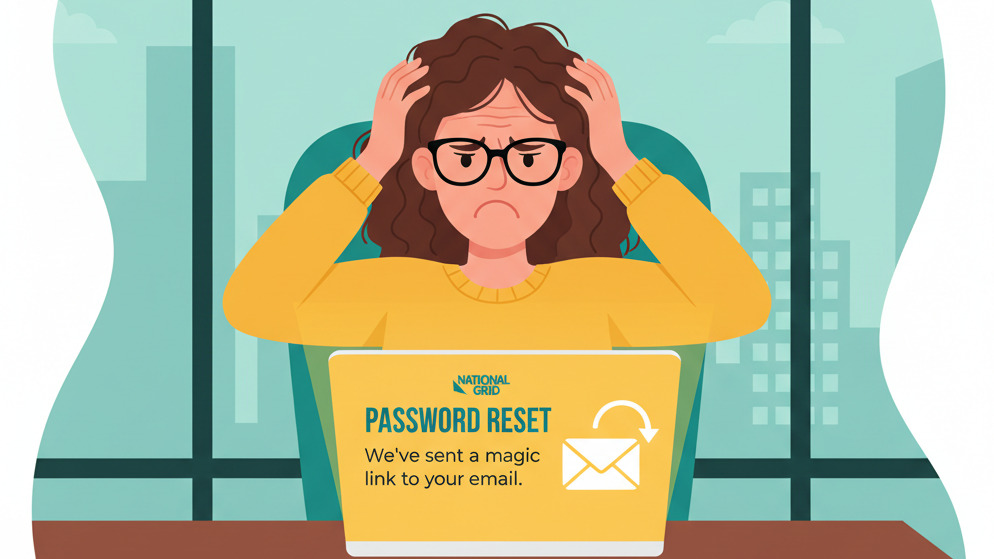
Quick fixes that usually work
- Use the National Grid password reset link on the login page.
- Check your inbox and spam folder for the reset email.
- Wait a few minutes before requesting another link.
- Try a different browser if the page keeps loading badly.
- Clear the cached data if the portal will not save your profile.
If you never got the activation email, check that you typed the right address during registration. If you have made more than one profile, the system may treat them as separate accounts. That can create confusion when you try to track application status later.
How To Search For Graduate, Apprentice, And Trainee Roles
Early-career candidates should not search only for “jobs.” Search by pathway. The best keywords are graduate, apprentice, internship, trainee, and early career. That is the fastest way to find structured entry routes in the National Grid careers portal.
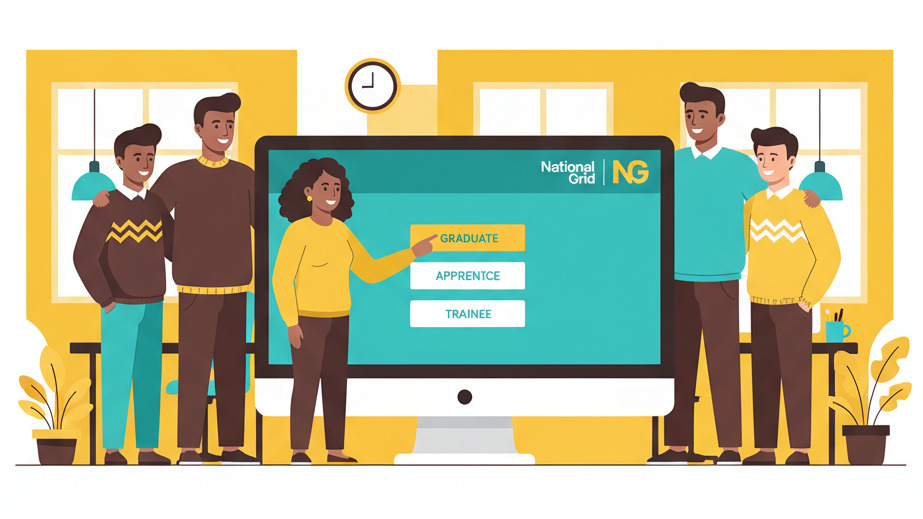
Use filters for location, experience level, and job family. Check engineering, project support, operations, digital, and data roles. Many candidates miss good options because they only look at obvious technical openings.
For 2026, employers in energy and infrastructure are screening more closely for engineering basics, data literacy, sustainability awareness, and proof of project work. That makes the national grid application process more competitive than a simple form submission.
How to apply to National Grid the smart way
- Match your CV to the job description.
- Use the same job keywords found in the role summary.
- Show safety awareness and teamwork in your examples.
- Keep file names simple, like Aisha_Khan_CV.pdf.
- Review every answer before you click submit.
If you want help tailoring your CV first, use the CV writing guide before you return to the portal.
How To Complete The National Grid Application Form
The application form is where many candidates lose time. Missing fields, bad uploads, and rushed answers can stop a strong profile from moving forward.

Read each question slowly. Some parts may ask about education, work history, eligibility, project work, or safety-related experience. If the form asks for competency examples, answer with short, clear STAR-style points: situation, task, action, result.
Keep these points in mind while filling it out:
- Use the same dates across your CV, LinkedIn, and form.
- Do not leave blank fields unless the form allows it.
- Upload documents in the accepted file format.
- Save progress often if the portal has a session timeout.
AI-based screening and ATS tools are more common now, so simple wording helps. Do not hide your experience behind vague language. Say what you did, what tools you used, and what result you achieved.
Common Application Errors And How To Avoid Them
Here are the mistakes that cause the most trouble in the national grid application process.
- Duplicate profiles: Use one email address and one account.
- CV parsing issues: Keep formatting clean and avoid text boxes.
- Missing mandatory fields: Check every section before submitting.
- Wrong job family: Apply only if the role fits your background.
- Status confusion: Refresh the portal and watch for confirmation emails.
Do not rush because the portal looks familiar. A small error in a form can delay review or send your application to the wrong place.
What National Grid Looks For In Early-Career Candidates
National Grid is not only hiring for technical knowledge. It also looks for people who can work safely, communicate clearly, and handle responsibility in a regulated environment.
The strongest early-career candidates usually show:
- Safety and compliance awareness
- Problem-solving under pressure
- Teamwork and stakeholder communication
- Engineering fundamentals or systems thinking
- Data analysis and Excel basics
- Interest in energy transition and sustainability
For a National Grid graduate scheme or National Grid trainee program, project work matters too. Coursework, internships, labs, final-year projects, and competitions can all support your story.
Interview Preparation For National Grid Roles
If your application moves forward, expect behavioral questions and role-specific questions. The interview may focus on safety, resilience, teamwork, and technical thinking. National Grid interview questions often ask why you want to work in the energy sector, not just the company.
Prepare short examples using school projects, internships, volunteer work, or part-time jobs. If you worked in a team, explain your role. If you solved a problem, show the steps you took.
Try these prep areas:
- Explain one project using clear numbers.
- Describe a time you handled pressure.
- Show how you followed a safety rule.
- Talk about one tool you used, like Excel or Power BI.
National Grid culture usually values reliability, teamwork, and purpose. Employees work in an environment where mistakes can have a real impact, so calm and careful communication matters.
Salary And Market Insights For Comparable Early-Career Roles
National Grid does not always publish exact pay in every listing, so you should verify each posting. Still, comparable energy and infrastructure roles give a useful benchmark.
- Pakistan: PKR 60,000–180,000 per month for early-career technical or analyst roles.
- India: INR 3.5–9 LPA for graduate engineering, operations, or energy analyst roles.
- UAE: AED 8,000–18,000 per month for entry-level energy and utilities roles.
The UAE still shows strong demand across major sectors, with around 500,000 annual job openings estimated for 2026. Abu Dhabi job availability was reported at 37% and Dubai at 34% in 2026, which suggests a moderate hiring climate. If you are comparing regions, these numbers show why energy and infrastructure careers remain attractive.
Common Mistakes To Avoid
Do not apply without reading the full role description. Do not use one generic CV for every role. Do not ignore regional eligibility rules for UK and US openings.
Also, avoid weak answers like “hardworking” without proof. Show evidence instead. For example, mention a lab project, a group assignment, a coding task, or a site visit that proves your interest in energy jobs 2026.
Frequently Asked Questions
How do I log in to the National Grid careers portal?
Go to the official National Grid careers site, select Sign In or log in, and use the email address and password tied to your candidate profile. If you have not registered before, create a new profile first and verify your email before applying.
What should I do if I forgot my National Grid careers password?
Use the password reset option on the login page, check your email inbox and spam folder for the reset link, and create a new password. If the reset email does not arrive, wait a few minutes and try again before contacting support.
Can I apply to National Grid without creating a profile?
In most modern career portals, you need a profile to submit an application and track progress. Creating a profile also lets you save jobs, update documents, and reuse details for future applications.
How do I find trainee or early-career roles at National Grid?
Use filters such as job family, location, experience level, and keywords like graduate, apprentice, internship, or early career. Check both engineering and non-engineering categories because utilities hire across many functions.
Why is my National Grid application stuck or incomplete?
Common reasons include missing mandatory fields, file upload issues, unsupported document formats, or a required assessment step. Review each section carefully and check for confirmation messages after saving.
What skills matter most for National Grid early-career jobs?
Problem-solving, safety awareness, communication, teamwork, digital literacy, and an understanding of energy systems are especially important. For technical roles, basic engineering, data, or systems knowledge is also valuable.
Conclusion
Mastering the national grid job login process is the first step, but it is only one part of the journey. You also need the right role search strategy, a clean application form, and strong interview examples. If you treat the portal like a structured funnel, you will waste less time and make fewer errors.
For early-career candidates, the best approach is simple: build a clear profile, target the right trainee or graduate route, and show evidence of safety, teamwork, and practical thinking. That is how you make your application easier to review and easier to trust.
For more support, explore the jobs page, the salary trends page, and the rest of the Trainee.in blog.
Need more help with early-career applications? Read the next Trainee.in guide to sharpen your CV and job search before you apply again.
