

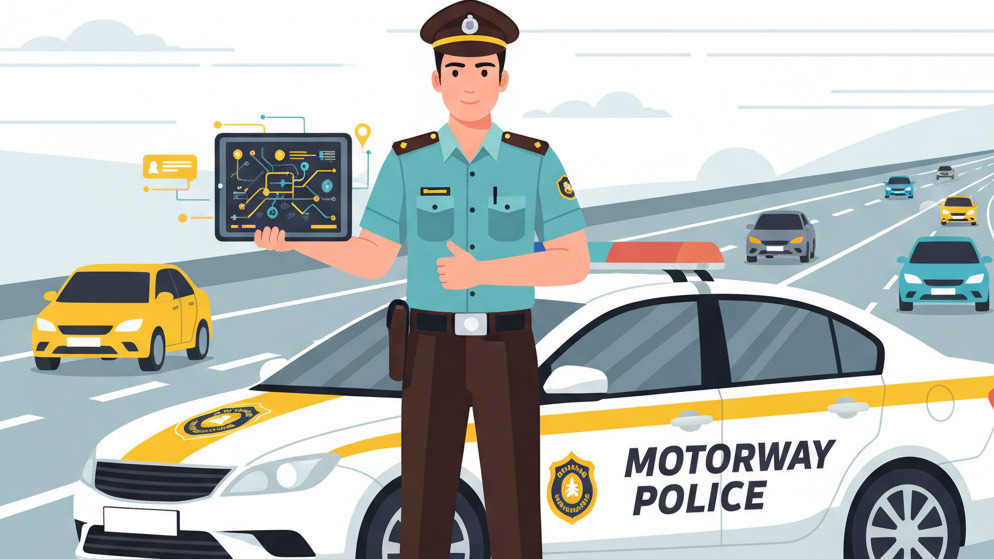
Motorway police careers in 2026 are not just about writing tickets. The role now includes traffic control, crash response, public help, and more use of digital tools. If you are looking at police jobs 2026, this field offers a clear path into public safety with real responsibility from day one.
This guide explains what motorway police officers do, how to become a highway patrol officer, what training is like, and how salary, benefits, and career growth work in 2026. It also covers the skills employers want now, plus the future of traffic enforcement.
Who This Guide Is For
This guide is for students, fresh graduates, and early-career workers who want a stable public-sector career. It is also useful if you are comparing highway patrol careers with those in security, transport, or other law enforcement.
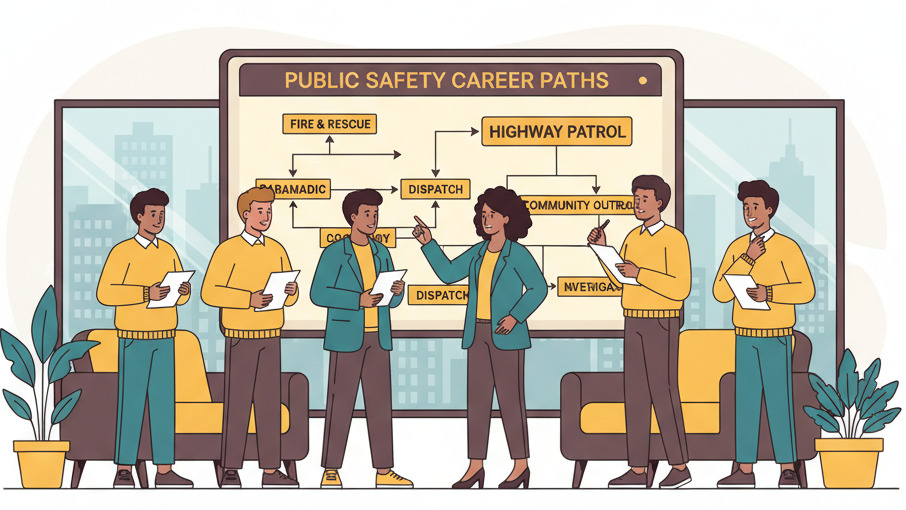
If you are preparing for motorway police recruitment, this page will help you understand the job before you apply. You will also get a simple view of salary, fitness standards, and the kind of work you can expect.
What Does a Highway Patrol Officer Do in 2026?
A highway patrol officer does much more than stop speeding cars. The job now covers traffic enforcement, crash prevention, roadside help, and incident handling. In many agencies, officers also use body-worn cameras, automatic number plate recognition, and data tools to support their work.
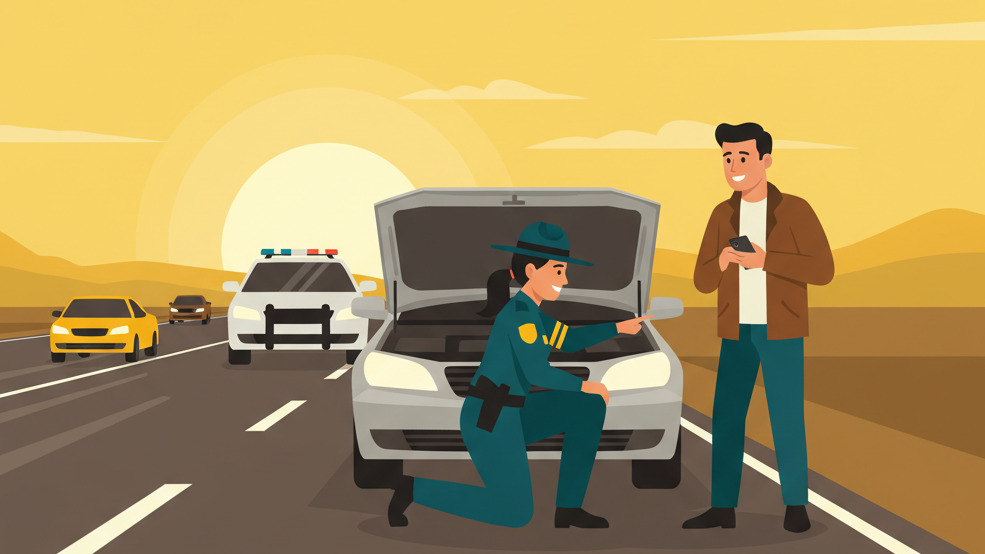
In simple terms, the role supports public safety on roads and motorways. Officers help keep traffic moving, reduce risk, and respond when something goes wrong.
Main duties in daily work
- Enforce traffic laws and issue warnings or fines where needed.
- Respond to road crashes and help secure the scene.
- Assist stranded motorists and manage roadside emergencies.
- Support traffic flow during jams, accidents, and major events.
- Write reports and record evidence clearly.
- Work with emergency services during serious incidents.
- Take part in road safety campaigns and public awareness drives.
The role is also becoming more data-aware. Agencies now use crash hotspot data to plan patrol routes and reduce risk before incidents happen. That shift means highway patrol careers now need both field sense and digital comfort.
Motorway Police vs Highway Patrol vs Traffic Police
These terms are often used in similar ways, but the exact meaning depends on the country. In Pakistan, the motorway police usually refers to the national or federal motorway force. In India, traffic police and highway patrol duties are often part of state police or transport enforcement systems. In the UAE, road safety and patrol roles vary by emirate and employer.
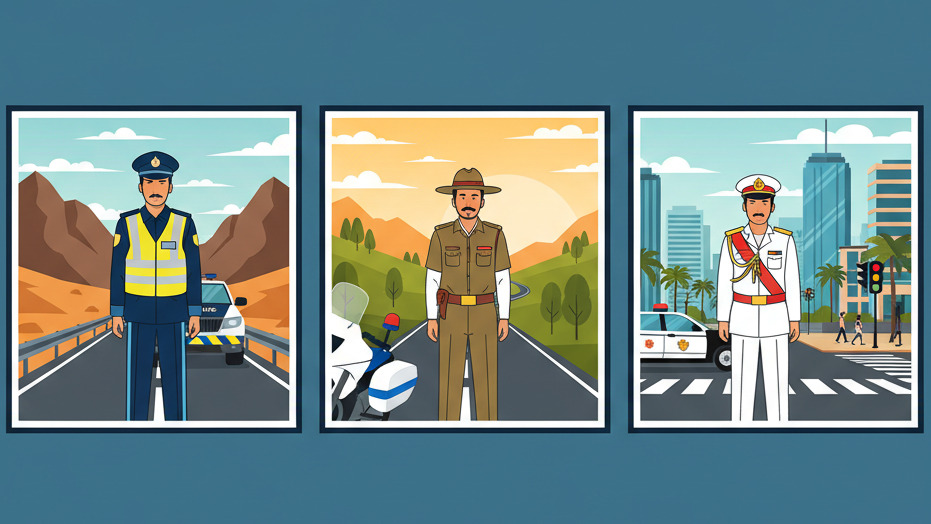
For job seekers, the key point is this: the work is similar, but the hiring body, rank system, and rules can be different. So when you read a notice, check the exact agency name, job title, age limit, and qualification rules.
How the roles differ
- Motorway police: Focuses on motorways, high-speed roads, and long-distance traffic safety.
- Highway patrol: Often a broader term for road policing and patrol work on highways.
- Traffic police: Usually handle city roads, junctions, road rules, and congestion control.
For applicants, the job skills are similar. Defensive driving, communication, discipline, and quick judgment matter in all three.
Why Choose a Career in Highway Patrol?
Many people choose highway patrol careers because the work has purpose. You are not sitting behind a desk all day. You are on the road, helping people, enforcing rules, and making travel safer for everyone.

There is also steady demand. Public safety jobs do not disappear because of one market trend. Even when private hiring slows, law enforcement careers often stay active because roads, transport, and emergency response still need staff.
Another reason is skill growth. Officers learn incident handling, report writing, team coordination, first aid, and evidence handling. These skills stay useful even if you later move into training, investigations, or administration.
There is also a wider labour market context. In 2026, only 20% of employees worldwide were engaged, and low engagement is tied to about $10 trillion in lost productivity. That makes mission-driven jobs more valuable, because agencies need people who can stay focused, learn fast, and work with structure. In the UAE, where there are about 500,000 job openings a year and tech vacancies have grown by around 20%, public safety roles also compete with private-sector jobs for disciplined entry-level talent.
Eligibility Criteria and Application Process
The exact rules depend on the country and agency, but most motorway police recruitment notices ask for a few common things. You usually need the right age, minimum education, a valid driving licence, a clean record, and good fitness. Some posts also require a written test, medical check, and interview.
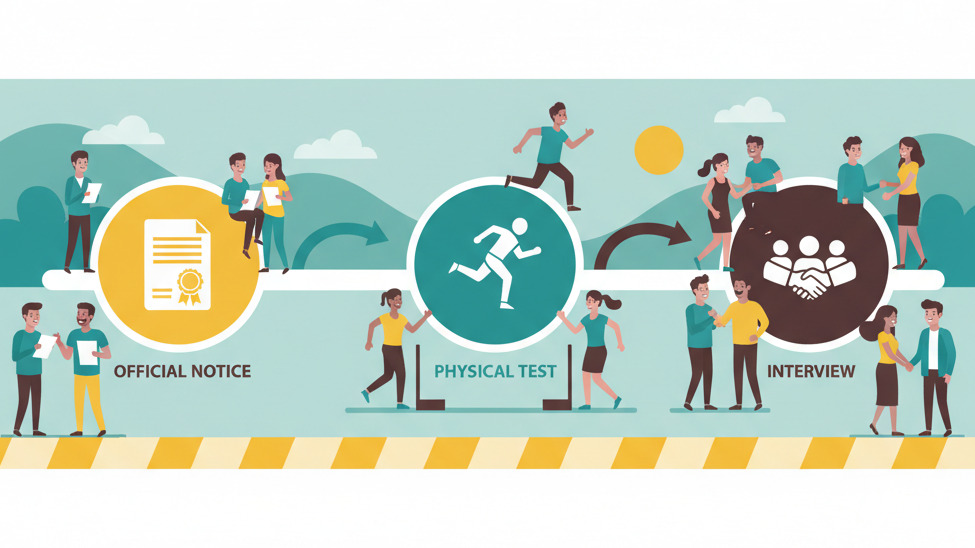
If you want to know how to become a highway patrol officer, start by reading the official notice carefully. Do not rely on social media posts alone. The recruitment paper or official website is the source that matters.
Common eligibility checklist
- Meet the age limit in the official notice.
- Have the required education level, often secondary school or higher.
- Hold a valid driving licence if the post requires it.
- Pass the written test or aptitude test.
- Pass the physical test, medical test, and background check.
- Clear the interview and final selection stage.
Pakistan-specific note
For Pakistan Motorway Police and related highway patrol units, current official recruitment criteria can vary by cadre, province, and federal setup. Many posts include basic pay plus allowances such as risk, uniform, and transport-related support. Exact age limits, vision rules, and fitness benchmarks should always be checked in the latest recruitment notice because they change by post.
India-specific note
In India, highway patrol careers may sit under state police, transport enforcement, or special traffic units. Recruitment usually depends on the state police board or service rules. Salary, grade pay, and allowances also depend on the pay commission rules used in that state.
UAE-specific note
In the UAE, traffic enforcement roles depend heavily on the emirate and employer. Some roles are public-sector and come with housing, transport, medical, and leave benefits. But many law-enforcement positions are restricted by citizenship or special eligibility rules, so read the notice carefully.
Training, Academy Curriculum, and Physical Standards
Highway patrol training requirements are usually strict because the work is physical and public-facing. Training often covers law, driving, safety, communication, and field response. Some agencies also include digital systems training because modern traffic enforcement is more tech-based than before.
Academy length varies by jurisdiction. In some places, it may run for several weeks. In others, it can last a few months, followed by field training under supervision.
What academy training usually covers
- Traffic law and road safety rules
- Defensive and pursuit-safe driving
- First aid and CPR
- Report writing and evidence handling
- Communication and de-escalation
- Use of body-worn cameras and enforcement tools
- Incident scene control and emergency coordination
Physical standards you may face
Physical standards vary by agency, but they often test strength, endurance, speed, and general fitness. Many notices also include height, chest, or vision requirements. Some roles check hearing and overall medical fitness, too.
If you wear glasses, do not assume you are disqualified. Many agencies allow corrected vision if it meets the stated rule. The key is to read the official medical standard, not guess.
Skills Needed for Highway Patrol Work in 2026
The best officers in 2026 are not only strong and disciplined. They are also clear communicators and careful decision-makers. As traffic enforcement becomes more digital, officers need basic data literacy and comfort with new systems.
AI skills demand has grown 7x in recent years, and that matters even in policing. AI is not replacing officers, but it is changing how patrols are planned, how incidents are detected, and how evidence is handled.
Core skills to build
- Defensive driving for safe patrol work.
- Situational awareness to notice risk early.
- Communication to speak clearly with drivers and teams.
- De-escalation to calm tense situations.
- First aid and CPR for emergency response.
- Incident reporting for clear records.
- Evidence handling for camera footage and documents.
- Digital literacy to use cameras, tablets, and recording systems.
- Data interpretation to understand patrol trends and hotspots.
- Team coordination to work with dispatch and emergency crews.
Soft skills matter too
Police jobs 2026 are increasingly skills-focused. Agencies want people who can learn, adapt, and work under pressure. A calm tone, good memory, and respect for procedure can matter as much as physical speed.
If you are comparing law enforcement careers, this is a field where small habits matter. Arrive on time, keep your records clean, and listen before you speak. Those habits build trust with supervisors and the public.
A Typical Day in the Life of a Highway Patrol Officer
A typical day can start with a briefing, route checks, and equipment checks. After that, officers move between patrol, traffic monitoring, incident response, and public contact. Some shifts are routine. Others change quickly after a crash, weather issue, or road closure.
For example, one shift may include speed checks, a stranded vehicle, a minor collision, and a public awareness stop about seat belts. Another may focus on an accident scene, evidence collection, and working with ambulances or fire teams.
Common shift tasks
- Attend shift briefing and review hotspot data.
- Check the vehicle, camera, radio, and safety equipment.
- Patrol assigned road sections.
- Monitor traffic flow and respond to calls.
- Assist motorists with breakdowns or directions.
- Prepare reports and upload evidence at the end of the shift.
This is why the role suits people who like action but also like structure. You need energy for the road and discipline for the paperwork.
Salary, Allowances, and Benefits
Traffic police salary 2026 depends on rank, country, and agency. Public-sector pay is usually built around base salary plus allowances. In many cases, the total package matters more than the base figure.
Because exact numbers change by official notice, treat the ranges below as broad market guidance, not final figures. Always verify the latest recruitment ad before applying.
Pakistan
- Entry-level motorway police or highway police posts: varies by cadre and rank.
- Usually includes basic pay plus risk, uniform, and transport-related allowances.
- Check the latest official notice for the exact scale and benefits.
India
- State traffic police or highway patrol constable/sub-inspector roles vary by state pay rules.
- Usually includes dearness allowance and, where applicable, housing or travel benefits.
- Use the state recruitment ad for the exact pay band.
UAE
- Traffic patrol or road safety enforcement roles: depend on rank and emirate.
- Public-sector packages may include housing, transport, medical cover, and annual leave.
- Eligibility can be strict, and many roles are not open to all expatriates.
What to compare beyond salary
- Shift allowance
- Overtime policy
- Pension or retirement plan
- Medical coverage
- Uniform and transport support
- Promotion speed
For readers comparing markets, the safest approach is to compare total compensation and job security, not only base pay. Public safety work often pays in stability, benefits, and long-term growth.
Career Progression and Specialisations
Highway patrol careers usually begin on the front line. After that, officers can move into specialist traffic units, training, supervision, or administration. Some officers also shift into investigations or road safety education.
Promotion rules differ by agency, but the path is often tied to experience, exams, conduct, and performance reviews. In many systems, seniority helps, but test performance still matters.
Common growth path
- Recruit or constable-level patrol role
- Experienced patrol officer or senior officer
- Field training officer or specialist traffic role
- Supervisor or team leader
- Training staff, investigator, or administrative role
- Higher command or policy role
Some officers also specialise in crash investigation, enforcement planning, road safety outreach, or evidence review. If you stay long enough, you can build a stable career with real movement.
Promotion timelines
Timelines vary by country and department. Some agencies promote after fixed service periods and exams. Others use vacancy-based promotion. If you are serious about the path, ask current officers or review the service rules before joining.
Future of Traffic Enforcement and Law Enforcement Technology
The future of traffic enforcement is more digital, more measured, and more data-led. Officers will still be needed, but their tools are changing fast. AI-assisted traffic enforcement, automated number plate recognition, speed cameras, and body-worn cameras are becoming normal in many places.
Patrol planning is also changing. Agencies now study crash hotspots, road patterns, and incident data to decide where officers should be placed. That makes work more efficient and helps reduce serious accidents.
Key trends shaping 2026 and beyond
- AI-assisted traffic enforcement and incident detection
- Body-worn cameras and evidence management systems
- Automated number plate recognition and speed enforcement
- Data-driven patrol allocation based on crash hotspots
- Connected vehicle data for faster incident triage
- More road safety education and preventive policing
Will AI replace highway patrol officers? No. AI can support detection, reporting, and deployment planning. But human judgment is still needed for public contact, safety decisions, and emergency response. That is why technology will change the job, not remove it.
For job seekers, this is actually useful. If you are comfortable with digital tools, you may adapt faster than older candidates who avoid them. That can make you stronger in motorway police recruitment and later promotions.
Where to Find Jobs and Prepare Your Application
Start with official recruitment notices from the police, transport, or public service commission in your country. Then use trusted job platforms to track openings and deadlines. For Pakistan, that may include government portals and official ads. For India, watch state police boards and transport departments. For the UAE, check emirate-specific public sector portals and approved recruitment channels.
You can also use Trainee.in jobs to watch new openings and compare role requirements. If you want more career help, see Trainee.in career guides for practical job advice. If your application needs improvement, the CV writing guide can help you present your skills clearly.
Before you apply
- Read the official notice line by line.
- Check age, education, licence, and medical rules.
- Prepare your documents early.
- Train for the physical test weeks in advance.
- Practice written answers on traffic law and general awareness.
Common Mistakes to Avoid
Many applicants lose time because they rush the process. Others fail because they do not read the notice carefully. A few prepare only for fitness and ignore written or medical stages.
- Ignoring the official notice: Rules change by post and region.
- Assuming all agencies are the same: They are not.
- Skipping fitness prep: Physical tests can be strict.
- Weak document checking: One missing paper can delay your file.
- Poor report writing practice: Clear writing is part of the job.
- Underestimating digital tools: Modern traffic enforcement uses cameras and systems.
If you avoid these mistakes, your chances improve before the interview stage even starts.
Frequently Asked Questions
What does a highway patrol or motorway police officer do?
They enforce traffic laws, respond to crashes and roadside emergencies, manage traffic flow, assist motorists, support road safety campaigns, and increasingly use digital tools for monitoring and reporting.
How do I become a highway patrol officer in 2026?
Typical steps include meeting age and education requirements, passing written, physical, medical, and background checks, completing academy training, and then finishing field training under supervision.
What qualifications are usually required?
Requirements vary by country and agency, but commonly include secondary education or higher, a valid driving licence, strong fitness, a clean record, and the ability to pass aptitude and medical screening.
Is prior military or security experience necessary?
Usually not required, but it can help. Agencies generally value discipline, teamwork, public contact experience, and the ability to work shifts under pressure.
What skills matter most for highway patrol in 2026?
Top skills include defensive driving, situational awareness, communication, de-escalation, report writing, first aid, digital tool use, and adaptability to new enforcement technology.
What is the career progression in traffic or highway patrol?
Officers often progress from patrol to senior officer, field training officer, specialist traffic investigator, supervisor, training staff, or administrative and command roles.
Will AI replace highway patrol officers?
No. AI is more likely to automate parts of detection, documentation, and deployment planning, while officers remain essential for judgment, public interaction, enforcement decisions, and emergency response.
Conclusion
Motorway police careers in 2026 offer a clear path for people who want steady work, public service, and practical responsibility. The job is broader than traffic fines. It includes safety, response, communication, and the growing use of technology.
If you are preparing for a career in highway patrol, focus on the official notice, the physical test, and the basic skills that matter most. Clear writing, calm judgment, and digital comfort can set you apart.
For more practical help, explore the latest Trainee.in the blog and compare openings on Trainee.in jobs before you apply.
