


Many students start M.A. English preparation by reading the syllabus from top to bottom. That often feels slow and confusing. A better way is to use an English past papers sindh university as a study tool from the start. Past papers show what the exam usually asks, how deep the answers should be, and which topics repeat.
For Sindh University students, this approach saves time and gives structure. It also helps you prepare for 2026 with less guesswork and more focus.
Understanding the Sindh University M.A. English Exam Structure
The first step in MA English preparation at Sindh University 2026 is decoding the paper pattern. Do not start by memorizing every chapter. Start with the exam shape.
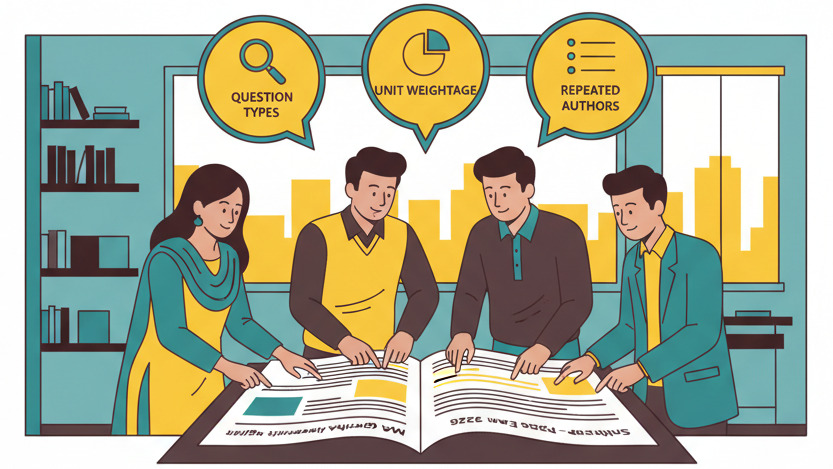
Look for these things in each paper:
- Question types: short notes, long essays, textual analysis, and critical questions.
- Unit weightage: Which sections appear more often?
- Repeated authors, periods, and themes.
- The level of argument expected in long answers.
This is where the Sindh University MA English exam pattern matters most. If you know how marks are usually distributed, you can plan your revision better. The MA English syllabus at Sindh University becomes easier to manage when you map it against real paper trends.
Why M.A. English Past Papers of Sindh University Matter for 2026
The MA English past papers of Sindh University are not just practice sheets. They work like a trend file. When you compare five or more years, the repeated questions become easier to see.
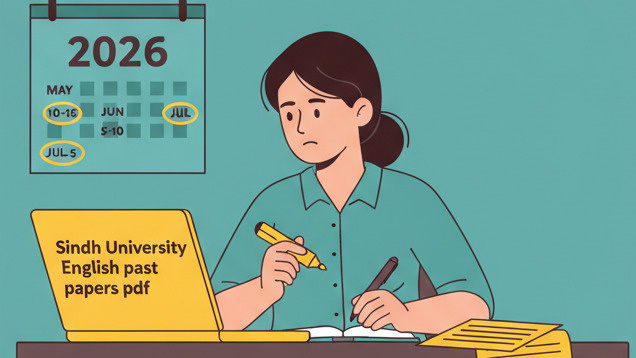
This matters because postgraduate English papers rarely test only memory. They test how well you explain, compare, and support your answer. In Pakistan, university-level English preparation in 2025–2026 often depends on past paper repetition and syllabus mapping, not full-text memorization alone.
A timed-answer approach also helps because these papers ask for sustained writing, not quick multiple-choice recall. Digital access to Sindh University English past papers PDF copies has made this easier. Students can now compare more years instead of studying one paper at a time.
How to Analyze Past Papers Step by Step
Do not solve papers randomly. Analyze them like a study dataset. That is the best way to use past paper analysis for an English literature exam.

- Collect 5 to 10 years of papers. If official copies are missing, ask the examination office, department notice board, library archives, senior students, or trusted student groups on WhatsApp and Telegram.
- Group questions by unit and theme. Write down which topics appear again and again.
- Mark repeated authors and concepts. Focus on literary periods, critical terms, and long-answer prompts.
- Reverse-map the syllabus. Start from the questions and move back to the chapters they come from.
- Practice timed answers. Write the most common questions under exam conditions.
This method is stronger than reading notes in order. It helps you prioritize what is likely to matter most.
Recurring Themes and High-Yield Topics
Most students feel overwhelmed because they try to study everything equally. That is not practical. A high-yield plan means giving more time to the topics that repeat most often in the MA English past papers at Sindh University.
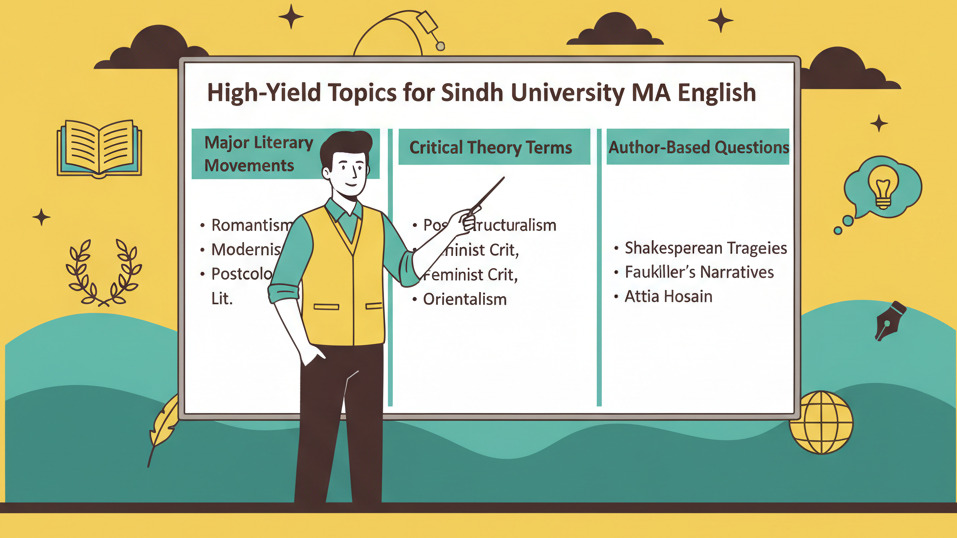
Common high-yield areas usually include:
- major literary movements and periods
- critical theory terms and key critics
- author-based questions
- textual interpretation and comparison
- short notes on repeated themes, motifs, and characters
For example, if a question on a major writer appears in different forms across several sessions, that topic should move to your first revision list. This is the same logic used in many student exam prep guides: repeat topics first, rare topics later.
How to Write A+ Answers from Past Paper Trends
Strong content is not enough. In M.A. English, answer quality matters a lot. Examiners usually reward structure, textual references, literary terms, and clear comparisons.
Use this simple answer pattern:
- Start with a direct thesis. Say what your answer will prove.
- Add 3 to 5 clear points. Keep each point focused.
- Use quotations or text references. Even short references help.
- Include critical language. Use terms like irony, imagery, symbolism, or narrative voice where they fit.
- End with a short judgment. Tie your final line back to the question.
If a past paper asks about a poem, do not just summarize it. Explain tone, imagery, structure, and meaning. That is the kind of answer that scores better in Sindh University English exams.
From Memorization to Critical Thinking
One of the biggest mistakes in preparing for the MA English exams is memorizing model answers word for word. That can fail when the question is slightly changed. A better method is to learn ideas, not fixed scripts.

Critical thinking in English means asking:
- What is the question really asking?
- Which text details support my view?
- How does this author compare with another one?
- What critical point can I add beyond the summary?
This matters because many questions in the MA English preparation at Sindh University 2026 ask for interpretation, not a plain definition. A student who can explain a theme clearly usually scores better than one who only remembers lines.
Using Past Papers for Time Management and Mock Tests
Past papers also help with time control. Many students know the content but run out of time during the exam. Weekly timed drills fix that problem early.
Use a simple weekly routine:
- One day: review one theme from the syllabus.
- One day: solve one short question set in 20–25 minutes.
- One day: write one full, long answer in exam time.
- Weekend: check your answer for structure, examples, and missing points.
This is especially useful if you study from scanned or shared paper sets. A Sindh University MA English guide should not stop at notes. It should help you practice under time pressure. If you want more support with study structure, the career guides and salary trends pages can also help you see how strong English writing skills support future jobs.
Common Mistakes to Avoid
- Studying the syllabus in order without checking repeated questions first.
- Memorizing answers without understanding the argument.
- Ignoring short notes and focusing only on long essays.
- Using old papers one by one instead of comparing trends.
- Skipping timed practice until the last week.
- Relying only on unofficial guesses without cross-checking the paper style.
Recommended Resources and Study Routine for Success
For 2026, keep your study routine simple and steady. Use official syllabus notes, departmental material, and 5 to 10 years of Sindh University English past papers PDF files if you can find them.
Good supporting platforms and resources include:
- University examination office and department notice boards
- Senior students and class groups
- WhatsApp and Telegram paper-sharing groups
- Library archives and scanned paper folders
- General writing practice through Google Docs for timed drafting
If you want stronger writing support, use answer outlines, not full memorized scripts. That keeps your answers flexible and helps with real exam questions. Students who build these habits also improve skills like academic writing, literary criticism, quotation integration, note synthesis, and revision planning.
Salary and Career Value of Strong English Skills
Good exam preparation is not only about marks. Strong English skills can also support future work in teaching, editing, and content roles.
- Pakistan: M.A. English graduates in teaching, tutoring, or academic support often earn PKR 35,000–120,000 per month.
- Pakistan: Content writing and editorial roles may pay PKR 50,000–180,000 per month.
- India: Postgraduate English teaching, tutoring, and editorial roles often pay INR 25,000–90,000 per month.
- UAE: English teaching or academic support roles for South Asian postgraduates may pay AED 5,000–12,000 per month.
These ranges vary by city, experience, and employer type. But strong exam writing habits often support these careers later.
Frequently Asked Questions
Why are past papers important for Sindh University M.A. English preparation?
They show repeated themes, likely question styles, and the depth expected by examiners. That helps you spend time on high-yield areas instead of studying everything equally.
How should I study Sindh University M.A. English past papers effectively?
Collect several years of papers, group questions by unit and theme, mark repeated topics, and then write timed answers for the most common questions. This works better than reading papers one by one.
Should I memorize answers from past papers?
No. Use them to understand patterns and expected arguments. Then prepare adaptable answers with text references and critical points you can adjust to different questions.
What is the best way to handle long essay questions?
Use a clear thesis, 3 to 5 structured arguments, relevant quotations or references, and a short concluding judgment that directly answers the question.
How many past papers should I analyze before the exam?
Ideally, analyze at least 5 to 10 years if they are available. That makes recurrence patterns much clearer.
What if official past papers are hard to find?
Check the university examination office, departmental notice boards, library archives, senior students, and reliable student-resource sites. Then cross-check the questions for consistency.
Conclusion
Preparing with my English past papers from Sindh University is less about guessing and more about pattern reading. When you study themes, question types, and answer structure together, your revision becomes sharper. That gives you a better chance of handling 2026 papers with confidence and control.
For more study support and practical learning advice, visit Trainee. in blog and explore more student-focused guides.
