


Many junior workers in Pakistan are facing job cuts and unstable roles after recent tech and startup layoffs. The situation is especially tough for those just starting their careers. This guide focuses on what you can do if you are affected by junior layoffs in the UAE in 2026 and are thinking about moving to the UAE for early career jobs.
Who this guide is for
This guide is for Pakistani students, fresh graduates, and early-career professionals who have lost or are at risk of losing junior roles. It is also for those who want to shift from unstable markets in Pakistan or Saudi Arabia to the UAE job market. The advice is practical and focused on real steps you can take in 2026.
If you are aged roughly 18–25, have limited work experience, and are worried about layoffs, this guide is written for you. It covers job search strategies, upskilling, and how to build early career resilience while planning a career pivot to the UAE.
Step-by-step roadmap after junior layoffs in the UAE 2026
1. Assess your situation and options
Start by writing down what you have lost and what you still have. List your skills, certificates, and any savings you can use for training or relocation. This helps you see what you can realistically move towards next.
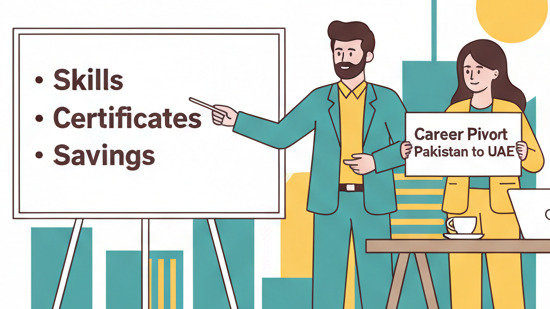
Then, decide if you want to stay in Pakistan or try a career pivot from Pakistan to the UAE. Many juniors are now looking at the UAE because of a 1,500% surge in Pakistani migration to the UAE in Q1 2026. This shift is linked to weaker opportunities in Saudi Arabia and stronger demand in the UAE for tech and construction roles.
2. Choose a realistic target role
After junior layoffs in the UAE 2026, it is important to pick a role that matches your skills and the market. For example, many Pakistani juniors are moving into entry-level tech support, junior data roles, or construction site assistant positions in Dubai and Abu Dhabi.

Look at real job postings on platforms like Rozee.pk, Bayt, GulfTalent, and Naukri. Check what skills and experience are listed for junior roles. If you see repeated keywords like AI fundamentals, data literacy, or cloud computing, those are signals of what you should focus on.
3. Build a clear 3–6 month plan
Break your next 3–6 months into small steps. For example, weeks 1–4 could be for learning one core skill, weeks 5–8 for building a small project, and weeks 9–12 for applying to jobs and networking. This makes the process less overwhelming.
Include time for rest and mental health. Early career resilience is not just about working hard; it is also about pacing yourself and avoiding burnout after a layoff. You can use free tools like Google Calendar or Notion to track your plan.
4. Update your CV and LinkedIn for UAE jobs
After layoffs, your CV and LinkedIn profile need to show that you are still active and learning. Add any new courses, projects, or freelance work you are doing. Use simple language and avoid long paragraphs.
For example, instead of saying “responsible for various tasks,” write “Managed 10–15 daily customer tickets using basic data tools.” Then, update your LinkedIn headline to something like “Junior Data Support | Open to early career jobs Dubai 2026.” This helps recruiters and AI tools find you more easily.
5. Start applying and tracking applications
Begin with 5–10 applications per week and slowly increase as you get feedback. Use a simple spreadsheet to track where you applied, the role, date, and any follow-up. This helps you see patterns and improve over time.
Focus on early career jobs in Dubai and other UAE cities. Many companies list junior roles on LinkedIn, GulfTalent, and Bayt. You can also use Trainee.in to find jobs that match your level and location goals.
Skills to focus on after junior layoffs, UAE 2026
Technical skills for Gulf jobs
After junior layoffs in the UAE 2026, many juniors are using upskilling to stay competitive. The UAE market in 2026 favours skills over degrees, especially for early-career roles. This means a good certificate can be more important than a long degree list.

Focus on skills that are in demand in the Gulf, such as:
- AI fundamentals (basic prompts, using AI tools for simple tasks)
- Data literacy (reading spreadsheets, simple dashboards, basic reports)
- Cloud computing basics (understanding what the cloud is, how it is used)
- Cybersecurity awareness (password hygiene, basic security practices)
These skills are often enough to qualify you for junior roles in tech support, data entry, or assistant positions.
Soft skills and early career resilience
After layoffs, employers also look for adaptability and quick learning. They want people who can adjust to new tools and processes fast. This is part of early career resilience.

Practice clear communication, asking questions, and taking feedback without getting defensive. These habits help you perform better in interviews and on the job. You can read short guides on career guides to improve your communication and interview skills.
Tools to learn for upskilling for Gulf jobs
To build the skills above, you do not need expensive courses. Many free or low-cost options exist. For example, Coursera and Google Career Certificates offer beginner courses in data, cloud, and cybersecurity.
You can also use YouTube, LinkedIn Learning, and free practice platforms to build basic AI and data skills. The key is to pick one or two tools and stick with them for a few weeks, rather than jumping between many options.
After you complete a course, add the certificate to your LinkedIn and CV. This shows employers that you are actively learning, even after junior layoffs in the UAE 2026.
Salary expectations and market data
It is important to know what you can realistically earn after a career pivot to the UAE. Salaries vary by role, city, and your skill level. Below are some typical ranges for early-career roles in 2026.
For UAE-based early career jobs:
- Junior tech/AI roles — AED 8,000–15,000 per month (tax-free; skills-certified juniors competitive in Dubai and Abu Dhabi)
- Entry-level construction roles — AED 5,000–10,000 per month (high demand from mega-projects; Pakistani workers filling gaps)
These ranges assume you have basic skills and some relevant training or experience. If you are still building skills, you may start at the lower end and move up as you gain more experience.
For more detailed salary trends and regional comparisons, you can check salary trends on Trainee.in.
Where to find early career jobs in Dubai and the UAE
After junior layoffs in the UAE 2026, many juniors look for jobs on online platforms. LinkedIn is one of the most important places to be active. You can also use GulfTalent, Bayt, Rozee.pk, and Naukri to search for early career roles.
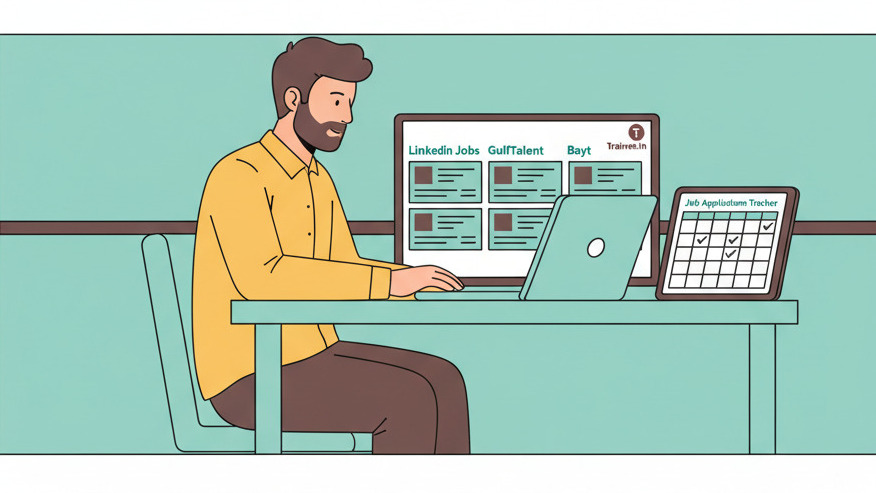
Some companies also post directly on their websites. You can create a short list of 10–15 target companies and check their careers pages regularly. Trainee.in also helps you find jobs that match your skills and location preferences.
When you apply, tailor your CV and cover letter to each role. Mention specific skills from the job description and give concrete examples of tasks you have done before.
Common mistakes to avoid after junior layoffs in the UAE 2026
After layoffs, it is easy to make mistakes that slow down your job search. One common mistake is sending the same CV to every job without updating it. This makes your application look generic and less likely to get noticed.
Another mistake is only focusing on big companies. Many juniors ignore smaller firms and startups, which often hire faster and are more open to people with limited experience. You can find these roles on platforms like LinkedIn and GulfTalent.
Some juniors also stop learning after a layoff. They wait for a job instead of using the time to build skills. This can make it harder to compete with others who are actively upskilling. You can avoid this by following a simple learning plan and tracking your progress.
Real career path examples after junior layoffs, UAE 2026
Here are two simplified examples of how Pakistani juniors have pivoted after layoffs in 2026.
First, a 23-year-old junior data analyst from Lahore lost his role in a small tech firm. He spent three months learning basic AI and data literacy through free online courses. Then he applied for junior data support roles in Dubai and got a position paying AED 9,000 per month. His background in data and his new certificates helped him stand out.
Second, a 21-year-old civil engineering graduate from Karachi struggled to find stable work in Pakistan. He moved to the UAE on a freelance visa and started working on short-term construction projects. Over time, he built experience and moved into a full-time assistant site engineer role with a salary of around AED 7,500 per month.
Frequently Asked Questions
Q: Why are Pakistani juniors moving to the UAE in 2026?
A: Pakistani juniors are moving to the UAE because of a 320–1,500% migration surge in early 2026. This is linked to weaker opportunities in Saudi Arabia and stronger demand in the UAE for tech, construction, and healthcare roles. Freelance visas also make it easier for juniors to enter the market and start working quickly.
Q: What skills help laid-off juniors re-enter the UAE market?
A: Skills that help laid-off juniors re-enter the UAE market include AI fundamentals, data literacy, cloud computing basics, and cybersecurity awareness. Many Gulf companies now use skills-based hiring, which means they focus more on what you can do than on your degree. Building these skills can improve your chances of getting early career jobs in Dubai and other UAE cities.
Q: How to network for early-career UAE roles post-layoff?
A: To network for early-career UAE roles after a layoff, you should attend Dubai and Abu Dhabi conferences, join professional associations, and use LinkedIn actively. With 72% of UAE professionals planning new roles in 2026, networking can help you hear about jobs before they are advertised. You can also connect with Pakistani professionals already working in the UAE and ask for advice on how they found their roles.
Q: Can I get a job in the UAE without a degree?
A: Yes, you can get some jobs in the UAE without a full degree, especially in construction and certain tech support roles. Skills-based hiring is growing in 2026, and many companies accept strong certificates and practical experience. However, for more advanced roles, a degree or equivalent experience may still be required.
Q: How long does it take to pivot after junior layoffs in the UAE 2026?
A: The time it takes to pivot after junior layoffs in the UAE 2026 depends on your starting point and how much you can learn each week. Many juniors see results in 3–6 months if they follow a clear plan, build one or two core skills, and apply consistently. Some people move faster if they already have relevant experience or strong language skills.
Conclusion
Junior layoffs in 2026 are hard, but they do not have to end your career. Many Pakistani juniors are using this time to pivot to the UAE job market and build stronger skills. By focusing on realistic roles, upskilling, and smart job search strategies, you can improve your chances of finding early career jobs in Dubai and other UAE cities.
The key is to stay consistent, avoid common mistakes, and use available tools and platforms to your advantage. If you follow a clear plan and keep learning, you can turn a difficult layoff into a step toward a more stable career.
If you want help with your CV, LinkedIn profile, or job search strategy, you can explore the CV writing guide and other resources on Trainee.in to support your next move.
