

Imagine Typing Your Way to a Lifesaving Career
Picture this: your fingers fly across the keyboard, entering vital patient data that helps doctors save lives at one of Pakistan's top hospitals. That's the thrill of being a Data Entry Operator at Indus Hospital Health Network.
Indus Hospital isn't just any workplace—it's a beacon of free healthcare serving millions. As a trainee or early-career pro, this role is your gateway into healthcare. Ready to dive in?
We'll break it down: requirements, real tips, and a cover letter blueprint. Let's get you hired!
What Does a Data Entry Operator Do at Indus Hospital?
At Indus Hospital Health Network, Data Entry Operators are the unsung heroes of patient care. You input medical records, patient histories, and lab results into digital systems with lightning speed and zero errors.

Daily tasks include verifying data accuracy, updating databases, and collaborating with nurses and admins. It's fast-paced—think handling 200+ entries per shift during peak times.|
Why energetic? Because your accuracy directly impacts treatment. One wrong digit could delay care. Indus reports over 1 million patients yearly, so your role has a massive impact.
Pro tip: Expect shifts in bustling Karachi or other sites. It's entry-level, but demands focus—like a gamer leveling up in real life.
Real-world example: A junior operator caught a data mismatch, preventing a medication error. Heroes wear keyboards!
Key Requirements to Snag This Role
To join Indus Hospital, start with the basics: Intermediate (F.A/F.Sc) or equivalent qualification. That's your ticket in—no degree needed for entry-level.
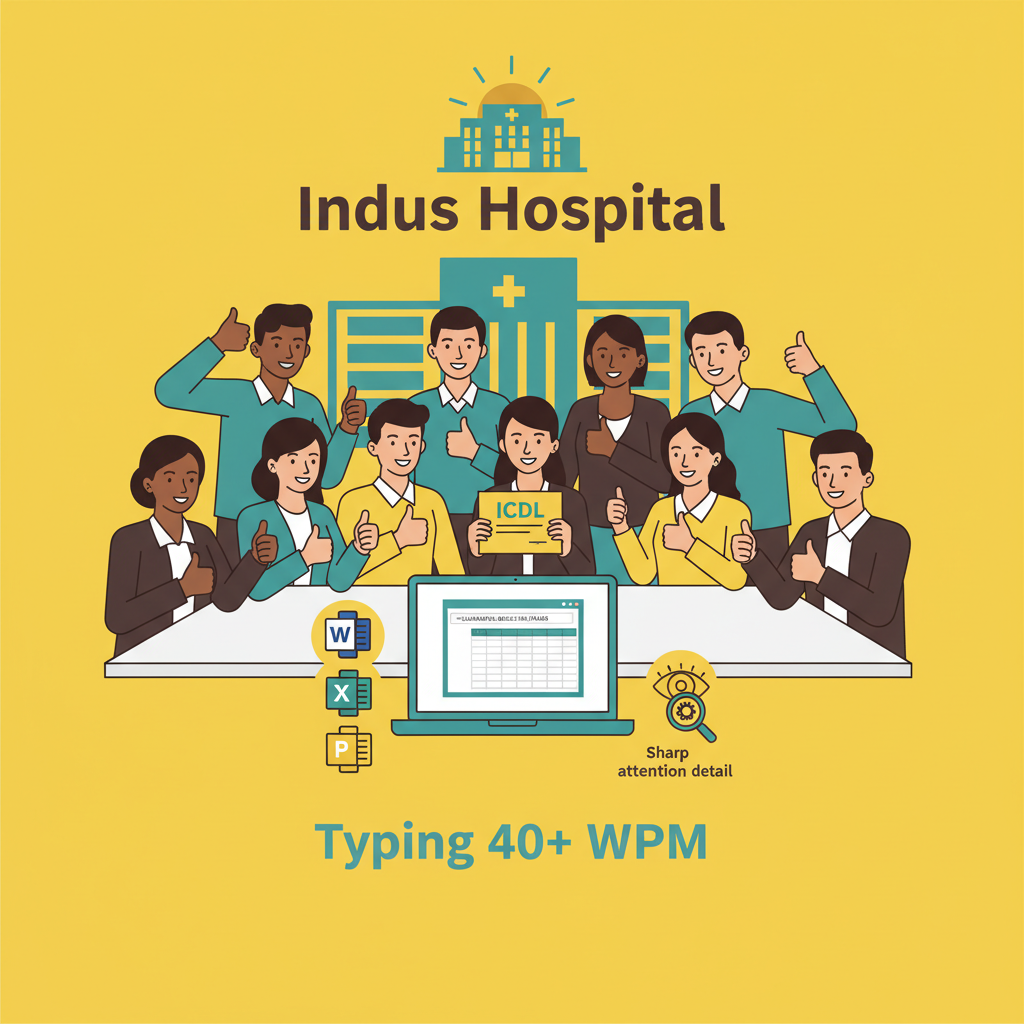
Essential skills? Typing speed of 40+ WPM, MS Office mastery (Excel, Word), and sharp attention to detail. Indus emphasizes error-free work in high-volume settings.
Age: Typically 18-30 for trainees. Freshers welcome, but 6 months of data handling experience boosts chances. Healthcare passion? A must—they seek team players.
Statistics: 70% of hires at similar hospitals are entry-level with certs like ICDL. Get certified—it's quick and game-changing.
Soft skills count too: reliability, confidentiality (HIPAA-like rules), and adaptability. Indus trains you, but shows potential upfront.
Technical Skills That Make You Stand Out
Master Excel: pivot tables, VLOOKUP for data sorting. Indus uses hospital software—practice free tools like Google Sheets.
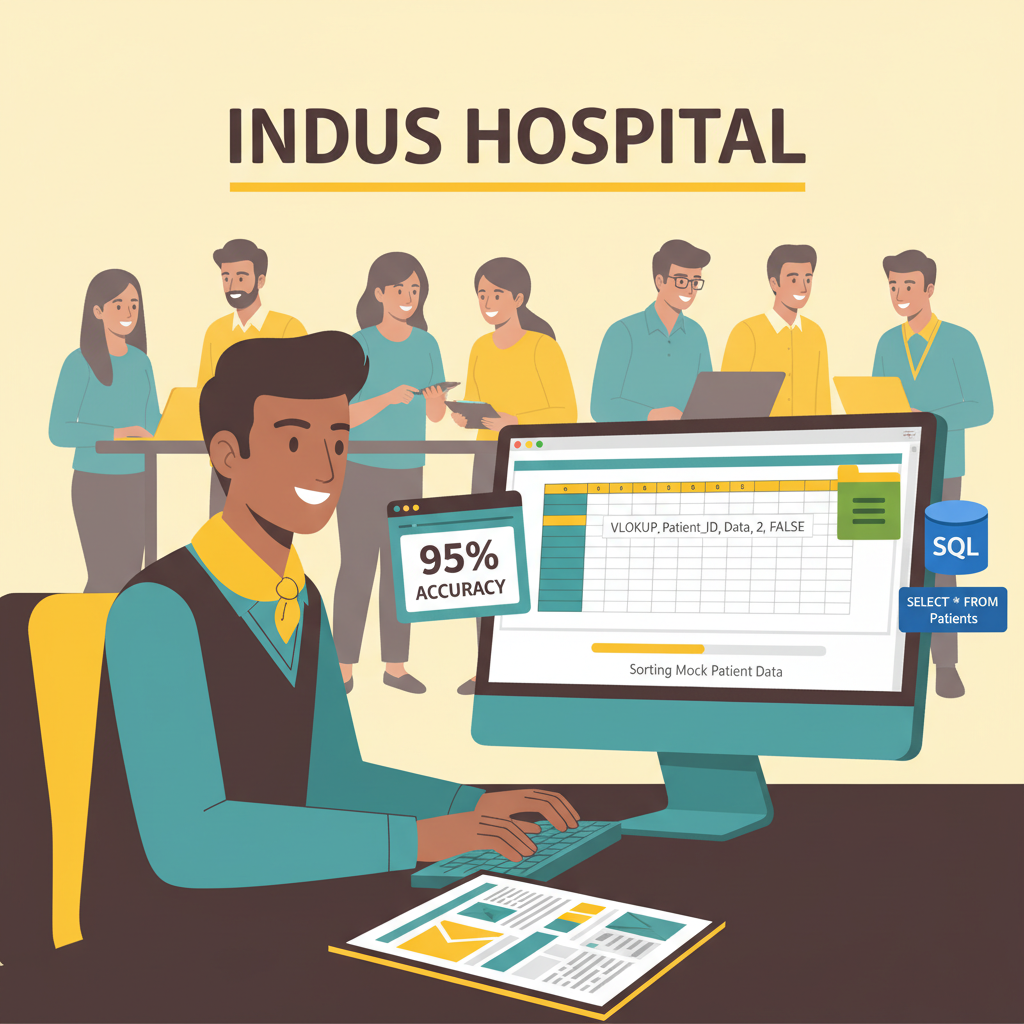
Typing accuracy over speed—aim 95%+. Test on sites like TypingClub. Indus tests this in interviews.
Bonus: Basic SQL or database knowledge. Entry-level roles evolve fast—learn via YouTube in a week.
Data point: Thomson Reuters notes attentive pros excel in data roles by researching first. Apply that here.
Actionable: Build a portfolio. Enter mock patient data (anonymized) and share in interviews.
Soft Skills Indus Hospital Loves in Trainees
Positive attitude wins. Show gratitude, listen actively—like Thomson Reuters interns who network via events.
Be open to feedback. Ask: "What can I improve?" Embed changes fast to shine.
Adaptability rules healthcare. Supervisors vary—learn styles quickly, per career blogs.
Network smart: Chat with interns, join hospital events. It's "net-giving," not just taking.
Example: A BU student landed roles by optimizing resumes with keywords. Mirror for Indus apps.
Step-by-Step Guide to Writing a Killer Cover Letter
Your cover letter is your story—make it pop for Indus. Structure: Hook, body, close. Keep 300 words, youthful vibe.
Opening hook: "As a detail-obsessed fresh grad with 50 WPM typing, I'm pumped to fuel Indus Hospital's mission." Tied to their free care stat: 3M+ patients served.
Body para 1: Skills match. "Excel wizard—sorted 500 records in college project, 98% accuracy." Quantify everything.
Para 2: Passion. "Volunteered at clinic, saw data's power in care." Show research on Indus Network's expansion.
Close strong: "Eager for an interview to discuss contributions." Sign warmly: "Excited future Operator, [Name]."
Cover Letter Example: Tailored for Data Entry
Dear Hiring Manager,
Indus Hospital's commitment to free, quality care inspires me. With 45 WPM typing and Excel prowess, I'm ready to ensure flawless data for your 1M+ patients.
In my internship, I managed 300 weekly entries with 99% accuracy, catching errors that saved time. NACE best practices guide me: real work, feedback loops.
Let's chat—I'm eager to contribute!
Best, Alex Khan
Tweak this template. Use keywords: "data accuracy," "patient records," from job posts.
Test it: Read aloud—energetic flow? VMock-like tools optimize.
Insight: Personalize. Reference Indus' Karachi site or recent expansions for the edge.
Common Mistakes to Dodge in Your Application
Error #1: Generic letters. No "copy-paste" vibes—tailor or trash.
#2: Ignoring ATS. Use job keywords: "data entry," "MS Office." BU warns pristine resumes beat buzz.
#3: No metrics. Don't say "good typer"—say "50 WPM, 97% accuracy."
#4: Typos—ironic killer for data roles. Proofread thrice.
Pro fix: Track apps weekly, per job tips. Stay organized, motivated.
Prep Tips: Ace the Interview and Beyond
Practice typing tests. Expect live demos at Indus.
Questions to ask: "How does data support patient outcomes?" Shows depth.
Follow NACE: Seek real assignments and mentors. Post-hire, network new-hire panels.
Long-term: Upskill to analyst roles. Internships build resumes.
Data: 80% interns convert to full-time with initiative. Be that stat!
Your Next Steps: Apply and Thrive Today
Indus Hospital awaits—roles like Data Entry Operator are trainee goldmines. You've got the blueprint: skills, letter, tips.
Update your resume, craft that letter, and apply via the Indus careers page. Track progress weekly.
Join Trainee.in for more: mock interviews, resume reviews. Your healthcare journey starts now—go land it!
What's stopping you? Hit apply and tag us @Trainee.in with wins. Future Operator, you're ready!
