


Civil services 2026 is still a strong career path for fresh graduates who want stable work and real public impact. The route is more varied now than before. You can enter through exams, graduate programs, or specialist public roles.
What changed in 2026 is the kind of work civil servants do. Digital governance, data use, policy writing, and citizen service delivery now matter as much as exam scores. If you are planning a public service career, you need to understand both the old exam routes and the newer entry points.
Civil Services in 2026: What Early-Career Candidates Need to Know
Civil Services 2026 is no longer only about memorising books for one big exam. Governments now want people who can write clearly, handle data, and work with digital systems. That means early-career candidates have more options, but also more competition.
For many students, the first question is simple: what counts as civil service, and what counts as public sector careers? Civil service usually refers to official government officer roles, often filled through competitive exams. Public sector careers also include regulators, autonomous bodies, municipalities, ministries, project teams, and state-linked organisations.
This difference matters because many first jobs are not in the top national exam path. They begin in entry-level government jobs, 2in 026 through analyst roles, trainee schemes, or departmental hiring. You should keep all of these routes open.
Key Entry-Level Civil Service Roles for Graduates
Fresh graduates often focus only on elite exams, but the Civil Services 2026 has more entry points than that. The best choice depends on your country, degree, and patience for competitive selection.
1. Competitive exam routes
In Pakistan, the CSS exam 2026 Pakistan remains the main route into the federal civil services. Provincial public service commissions also recruit for many useful roles. In India, UPSC civil services 2026 and state PSC jobs 2026 are still the most well-known tracks.

2. Graduate trainee and management programs
Many ministries, regulators, and government-linked bodies now run structured trainee programs. In the UAE, a UAE government graduate program can be one of the most realistic entry points for early-career applicants. These roles often look for strong English, Arabic, where relevant, and digital comfort.

3. Specialist and contractual roles
Policy, finance, procurement, IT, monitoring and evaluation, health, and urban planning are growing areas. These jobs are often filled outside the main exam system. They are useful if you want public service careers without waiting years for one central exam.

How to Apply for Government Jobs in 2026
Good civil service application 2026 work starts long before the form opens. Most candidates lose marks on avoidable mistakes, not on merit alone. You need a simple process and clean documents.
- Check eligibility first. Read the general limit, degree, domicile, nationality, and experience rules carefully.
- Track official portals. Use FPSC, PPSC, SPSC, UPSC, state PSC sites, ministry portals, and UAE career pages.
- Prepare documents early. Keep CNIC or ID, degree scans, transcripts, photos, and experience letters ready.
- Write for the role. Match your CV and application to the job, not to a generic template.
- Watch deadlines. Many postings close fast, and some portals reject late or incomplete forms.
For general job search support, you can also review current jobs on Trainee.in and compare them with career guides. If your form is weak, a clean CV writing guide can save you from basic errors.
Pakistan, India, and UAE: Civil Service Pathways Compared
Civil services 2026 look different across countries, even if the broad goal is the same. Here is the short version.
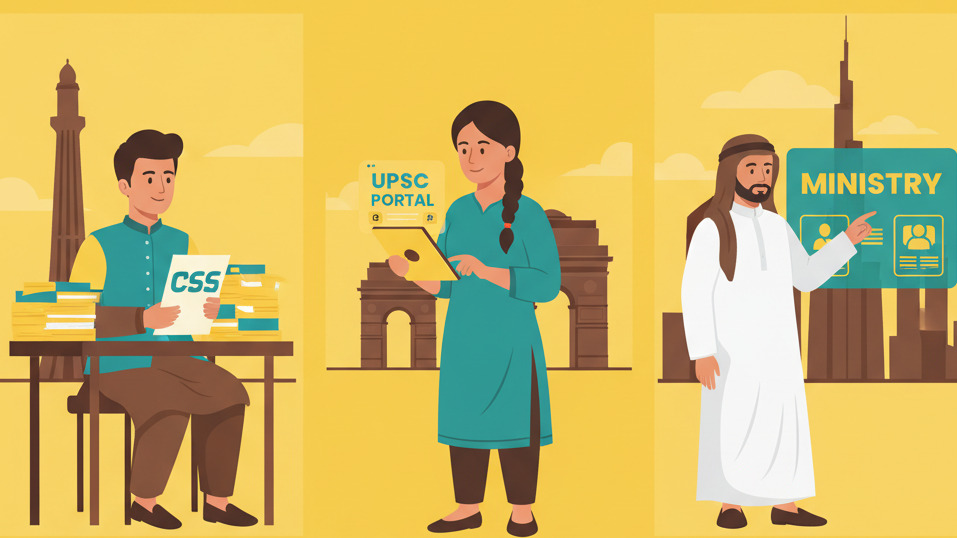
- Pakistan: CSS and provincial commissions are the main prestige routes. Many adjacent jobs also sit in autonomous bodies, regulators, and development projects.
- India: UPSC, state PSCs, SSC, banking, public enterprises, and contractual policy roles create a large entry ecosystem. Many young people build a public career step by step.
- UAE: Localisation policies make national talent pipelines important. Ministries, municipalities, regulators, and semi-government bodies often prefer graduate programs and junior tracks.
If you are in the Gulf, watch the official pages of ministries and semi-government employers closely. If you are in South Asia, keep both exam routes and policy roles in view. Many candidates ignore the wider public sector and wait too long for one exam result.
Benefits of a Career in Public Service
People still choose public service careers for clear reasons. The biggest one is impact. Your work can affect schools, roads, health systems, permits, and public access.
Other benefits are practical too. You often get job stability, structured growth, and a clear grade system. In many places, the total package also includes allowances, housing support, or strong retirement benefits.
Salary ranges vary by country and role:
- Pakistan: Provincial officer, assistant, or analyst roles often pay around PKR 60,000–180,000+ monthly. Federal civil service officers usually get modest base pay at first, but allowances raise the total.
- India: Entry-level central officer grades start around INR 56,100 basic pay, plus allowances. Contract policy or analyst roles often pay INR 40,000–150,000 monthly.
- UAE: Graduate and junior public-sector tracks often range from AED 10,000–25,000 monthly. Semi-government or regulator roles may reach AED 12,000–30,000 monthly.
The Evolving Role of Civil Servants in a Digital State
Civil Services 2026 is shaped by digital government. That means online permits, e-service delivery, digital records, dashboards, and faster public feedback. Civil servants are expected to work with systems, not just paperwork.
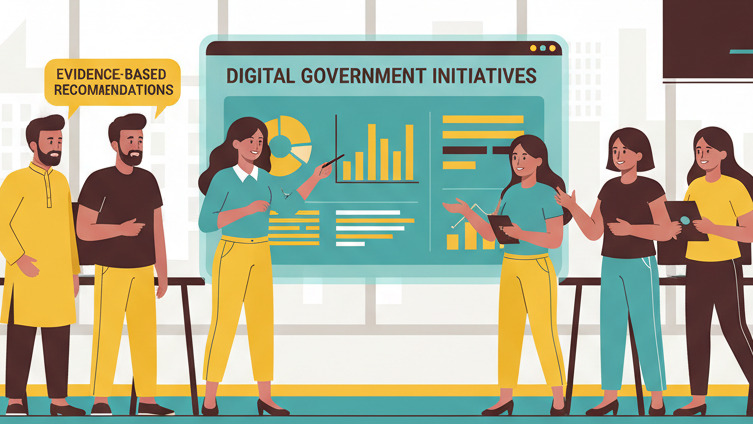
Policy work is also changing. Leaders want evidence-based recommendations, not only opinions. Climate resilience, disaster response, public health, urban planning, and compliance are becoming more important in many departments.
This shift also changes what employers look for. Analytical writing, data interpretation, stakeholder communication, and ethical judgment matter more than rote memorisation alone. If you understand spreadsheets and can explain numbers in plain English, you already have an edge.
Skills That Future-Proof a Public Service Career
To stay relevant, build skills that work across departments and countries. These skills help in exams, interviews, and actual office work.
- Analytical writing
- Current affairs research
- Policy analysis
- Report writing
- Public speaking
- Spreadsheet analysis
- Data interpretation
- Stakeholder communication
- Interview preparation
- Ethical decision-making
Also, learn basic digital tools. Excel, Google Sheets, PowerPoint, and simple AI tools for drafting or research can help you work faster. If you want to compare structured public routes with private-sector trainee paths, salary trends can also help you judge the trade-off.
Common Mistakes in Civil Service Applications
Many civil service 2026 applications fail for simple reasons.
- Missing the age or domicile rule.
- Uploading unclear documents.
- Using one CV for every role.
- Ignoring the official syllabus or job notice.
- Waiting until the last day to apply.
- Writing vague answers with no evidence.
Another mistake is treating all public jobs the same. Civil service, public sector careers, and contract policy roles are different. Read the notice line by line before you submit anything.
Success Stories: How Young Professionals Built Careers in Government
Young professionals often build public careers in stages. One common path is a provincial analyst role, then a policy unit, then a permanent department post. Another is a state-level service in India, followed by a later move into a stronger cadre or specialist post.
In the UAE, many graduates start in a ministry trainee scheme, then move into regulation, service design, or project work. In Pakistan, candidates who do not clear CSS on the first attempt often take up allied public-sector roles and keep preparing. That is a valid path, not a fallback.
The pattern is clear. The most successful candidates treat the civil service application 2026 as a long process, not a one-time event. They keep learning, keep applying, and keep building relevant skills.
Frequently Asked Questions
What is the best entry point into civil services for a fresh graduate in 2026?
The best entry point depends on your country and profile. In Pakistan, CSS and provincial commission routes are the main tracks. In India, UPSC and state PSCs are the most common. In the UAE, graduate programs and localised public-sector hiring are often the most realistic entry points.
Do I need a specific degree for civil service jobs?
Usually not for general administrative tracks. But specialist roles may prefer law, economics, public administration, engineering, IT, accounting, health, or environmental science. Always check the job notice before you apply.
Are civil service jobs only for top rankers?
No. Civil service careers also include mid-level public administration, regulators, municipal bodies, departments, and public-sector enterprises. Many of these roles use different selection standards from elite central exams.
What skills matter most for civil service applicants in 2026?
Analytical writing, current affairs, basic data skills, policy awareness, communication, ethics, and digital literacy matter most. These skills help in both exams and interviews.
How can early-career candidates future-proof a public service career?
Build exam readiness and practical skills together. Focus on writing, Excel or spreadsheet analysis, presentation, public speaking, report writing, and e-governance tools. That mix will help you across departments.
Conclusion
Civil Services 2026 offers more than one route into public work. You can enter through exams, graduate programs, or specialist roles, depending on your country and background. The best candidates understand the system, track official deadlines, and build skills that fit digital government.
If you want a stable career with public impact, this field is still worth serious attention. The key is to start with the right entry route and prepare with discipline. Keep your documents ready, follow official portals, and apply with a clear plan.
For more support, explore the Trainee.in blog, browse fresh jobs, and use our career guides to plan your next step.
